Trump's Beijing Window Closes in Five Days
The first US presidential visit to China in years lands this week, with three major think tanks arguing Xi holds the upper hand.
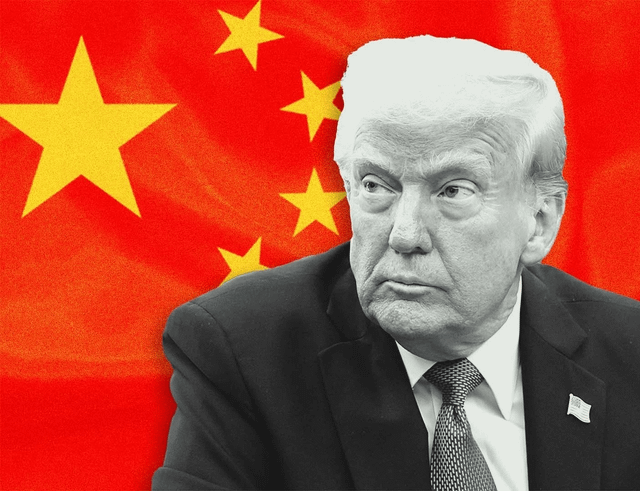
The most consequential US-China summit in years is now four days away, and Washington's leverage is thinner than the diplomatic calendar suggests.
Donald Trump is scheduled to arrive in Beijing on May 14 for a two-day summit with Xi Jinping, the culmination of months of stop-start diplomacy that was pushed back by the US military campaign in Iran. The visit, if it proceeds, will be the most significant face-to-face encounter between the two leaders in Trump's second term. It lands at a moment when three of Washington's most prominent foreign-policy institutions are publicly arguing that China holds the stronger hand.
The Council on Foreign Relations, the Carnegie Endowment, and the Brookings Institution all published analyses on May 10 reaching a strikingly similar conclusion: Beijing enters the summit with structural advantages that Trump will struggle to offset. The reasons are not abstract. The US is still engaged in an unfinished war with Iran that has stretched military resources and consumed diplomatic bandwidth. Trump needs a visible foreign-policy win before the November 2026 midterm elections. And Xi, who faces no electoral calendar of his own, can afford to wait.
CNN reported earlier this month, citing administration sources, that the unfinished Iran conflict has actively shifted the negotiating balance toward Beijing. The original summit date was pushed back when Trump's Iran military campaign escalated in the spring. That delay was not neutral. It gave Xi additional months to prepare, and it arrived Trump in Beijing carrying the political weight of an open second front. Fortune noted on May 10 that Chinese negotiators are "working backward from our midterm elections," treating Trump's domestic timetable as a concession lever rather than a constraint.
Prediction markets have compressed the visit into an unusually tight probability window. Traders on Polymarket price Trump arriving in China by May 15 at 87.5%, rising to just 95.7% by May 31. The 8-percentage-point gap between those two horizons is the narrowest of any multi-deadline market currently active on the platform. For comparison, Iran peace-deal probabilities fan from 31% by May to 50% by December, and Strait of Hormuz normalisation spreads from 22% by May to 49% by June. The China visit market does not spread. It compresses.
That compression tells a specific story. Bettors are not pricing a flexible diplomatic window. They are pricing a binary: the summit happens this week, or it does not happen at all. The volume confirms the conviction. The May 15 contract has drawn $320,000 in 24-hour trading, nearly double the $162,000 on the May 31 line. Money is concentrated on the near date, not hedged across the range.
What the markets are not pricing is arguably more revealing. There are no liquid Polymarket contracts on summit outcomes: no tariff-rollback percentages, no Taiwan communiqué language, no trade-deal probability curves. The entire prediction-market signal on this summit is that it happens. Not what it produces.
That absence matters. It suggests traders view the visit as an event whose political value is primarily symbolic for Trump and primarily tactical for Xi. A handshake in Beijing gives Trump a campaign photograph. It gives Xi the leverage of proximity: the ability to extract quiet concessions on tariffs, technology export controls, and Taiwan messaging that may not surface in any joint statement.
The Guardian framed the dilemma succinctly on May 10: Trump faces Tehran, Taiwan, and trade simultaneously, and the summit tightrope offers no clean resolution to any of them. The Iran campaign remains open-ended. Taiwan policy is constrained by congressional commitments Trump cannot unilaterally override. And trade negotiations have stalled since the US Trade Court ruled Trump's 10% global tariffs illegal on May 7, undermining Washington's main economic lever just days before Trump sits across from Xi.
The next five days will determine whether this summit is remembered as a diplomatic reset or a concession under pressure. The market has chosen its answer. It is pricing the visit as a near-certainty and the outcome as unknowable. For readers watching the US-China relationship, that gap between confidence in the event and silence on its substance is the signal worth tracking.
New to Polymarket?
Sign up via our link and get 6 months of Future Times Pro free — worth £30. Learn more