The Market Thinks the Iran War Escalates Next Week and Ends in Six Weeks
Ceasefire odds jump from 14% to 48% across six weeks, but military entry surges faster. The probability gradient reveals the market's sequencing bet.
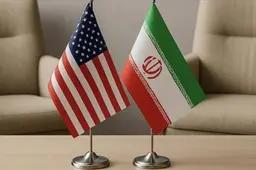
Markets are not just pricing whether the US-Iran war ends. They are pricing when.
Iran rejected the US 15-point peace plan on Monday, calling it "maximalist and unreasonable" in a statement from the foreign ministry that landed hours after American cruise missiles struck targets in Isfahan province. The proposal, first reported by the New York Times, included demands for full nuclear enrichment suspension, withdrawal of IRGC advisers from Lebanon and Yemen, and international inspections of military sites within 72 hours. Tehran's counterproposal, reportedly limited to a mutual cessation of strikes on energy infrastructure and a prisoner exchange, was dismissed by the White House as insufficient.
That rejection did not surprise prediction markets. What is worth studying is the shape of what they expect next.
Ceasefire odds on Polymarket sit at 14% by March 31, rising to 34% by April 15 and 48% by April 30, as of 25 March 2026. Read in isolation, those numbers look like noise. Read as a gradient, they describe a specific market thesis: no deal in the next six days, an escalatory phase through mid-April, and a coin-flip on diplomacy by month's end.
The military entry markets tell the same story from the other side. Traders price a 20% chance of US ground forces entering Iran by March 31, surging to 58% by April 30. The parallel structure is striking. Both curves steepen over the same period, which means the market's base case is not peace or war in isolation. It is war first, then a forced diplomatic off-ramp created by the costs of that war.
This is not a contradiction. It is a sequencing bet.
Trump's decision on Saturday to pause strikes against Iranian energy infrastructure for five days provides the immediate context. The hold, which Politico reported was driven by backchannel communications relayed through Oman, temporarily removed the threat to Kharg Island, the terminal that handles roughly 90% of Iran's crude exports. Markets pricing Kharg falling outside Iranian control by March 31 sit at just 8% on Polymarket. The pause bought time. It did not buy a deal.
The gradient across these markets reveals something that single-point odds miss: the market expects the next two weeks to be the most dangerous phase. Between March 31 and April 15, ceasefire odds jump 20 percentage points while military entry odds climb nearly 40 points. That acceleration implies traders see a period of simultaneous military escalation and diplomatic pressure, where each side raises the cost of continued fighting until one breaks.
Historical parallels are limited but instructive. The 1991 Gulf War ceasefire came 42 days after the air campaign began. The 2006 Lebanon war ended after 34 days when the UN brokered Resolution 1701 amid mounting Israeli casualties and international pressure. In both cases, the diplomatic window opened only after the military costs became politically unsustainable for at least one party.
The current conflict is 19 days old. If the probability gradient is right, the inflection comes around day 30 to 35, in the second week of April, when exhaustion, logistics strain, and international pressure converge.
For institutional readers and risk managers, the gradient matters more than any single number. Insurance markets for Gulf shipping, energy forward curves, and defence sector positioning all depend not on whether a ceasefire happens, but on the timing. A ceasefire by March 31 implies minimal further disruption. A ceasefire by April 30, preceded by weeks of escalation and a 58% chance of ground operations, implies something far more costly: a damaged Iranian energy sector, disrupted Gulf shipping lanes, and a reconstruction timeline measured in years.
The watch points are specific. If the Omani backchannel produces a counter-counter-proposal before Trump's five-day pause expires on Thursday, ceasefire odds for April 15 should move sharply. If the pause lapses and strikes on energy infrastructure resume, the April 30 military entry market will likely break above 60%. And if Kharg Island comes under direct threat, the entire curve reprices overnight.
The market is not confused about Iran. It is making a precise, time-stamped bet: escalation next week, exhaustion by mid-April, and a forced peace by the end of the month. The gradient is the forecast.
New to Polymarket?
Sign up via our link and get 6 months of Future Times Pro free — worth £30. Learn more