Iran's Regime Is More Stable Than Ever. So Is the Blockade.
The same political resilience that makes a deal possible keeps the Strait of Hormuz closed.
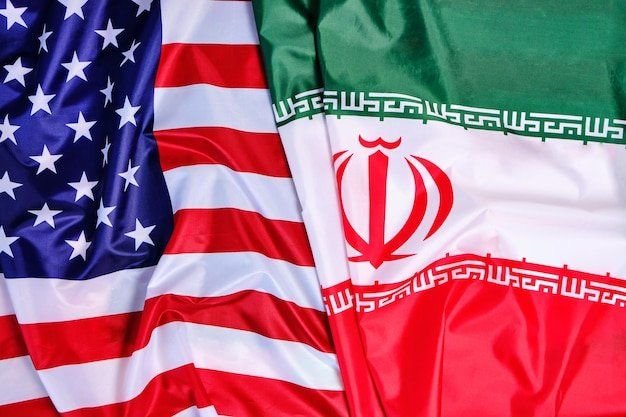
Tehran survived its most dangerous political transition in four decades without fracturing. That fact now underpins everything happening in the Gulf.
When Ayatollah Khamenei's succession played out in late February and early March, analysts across Washington and London braced for instability. It never came. The transfer of power was absorbed. The Revolutionary Guard held its lines. The bureaucracy kept functioning. Prediction markets have registered the outcome with brutal clarity: the probability of Iranian regime collapse by the end of May sits at just 1.8% on Polymarket.
That number matters far more than it looks. A regime that cannot survive a leadership transition is a regime that cannot negotiate. A regime that can is one the United States can do business with. This is the paradox now driving Gulf geopolitics: Iran's internal stability is the precondition for a peace deal, and markets are pricing both sides of that equation simultaneously. The odds of a US-Iran deal by December have climbed to 50.5%, buoyed by Axios reporting on May 6 that the two sides are closing in on a one-page memo framework to end hostilities.
The diplomatic architecture is real but minimal. This is not a comprehensive nuclear agreement. It is a war-termination document, narrowly scoped and deliberately thin, designed to create enough political cover for both sides to step back from active conflict. By May 8, the New York Times reported that US and Iranian forces had exchanged fire during what was officially described as a declared truce. The negotiating environment is volatile even as the negotiating will is genuine.
Here is where the stability paradox produces its most consequential output: a deal, even a signed deal, will not reopen the Strait of Hormuz overnight.
Markets are explicit about this sequencing gap. Hormuz normalization by the end of May is priced at just 22.5%. By the end of June, the figure rises to 49.5%. Set those numbers against the December deal probability of 50.5% and the implication is stark. The June Hormuz market and the December deal market are converging on nearly identical odds, separated by six months of calendar time. Traders expect a four-to-eight-week lag between any agreement and the physical reopening of the chokepoint.
The logic is structural. Hormuz is Iran's last piece of leverage. A regime that proved its durability through a supreme leader succession is not going to surrender its strongest bargaining chip the moment ink hits paper. The strait stays restricted until Tehran has verified compliance, secured sanctions relief, or simply run out the clock long enough to extract maximum concession value. Stability, counterintuitively, makes the blockade more sustainable, not less.
The real-world costs of that sustainability are compounding. Oil has traded above $106 a barrel since late April. On May 10, flight disruptions hit LAX, JFK, Madrid, and Barcelona as airspace pressures combined with the broader energy shock rippling out from the Gulf. Iran closing its own airspace by the end of May carries a 27.5% probability on Polymarket, a secondary escalation vector that would deepen the disruption even without a single additional barrel being blocked.
For energy importers and airlines, the critical insight is timing. The diplomatic calendar and the shipping calendar are now on different tracks. Washington and Tehran may reach a written agreement within weeks. The physical supply chain will not respond for weeks after that. Every day the strait remains restricted adds cost, and the market structure says most of those days are still ahead.
The regime stability that makes peace plausible is the same stability that keeps the pressure on. Iran can negotiate precisely because it is not collapsing, and it can keep Hormuz closed precisely because it is negotiating from strength. Until those two dynamics decouple, oil stays expensive and flights stay disrupted. Watch the June Hormuz market. When it breaks above 60%, the physical reopening is finally being priced as likely. It is not there yet.
New to Polymarket?
Sign up via our link and get 6 months of Future Times Pro free — worth £30. Learn more