Iran's War Just Crossed Into the Gulf
The first direct Iranian strike on a US Gulf ally reshapes the region's alliances and tests a ceasefire that exists only on paper.
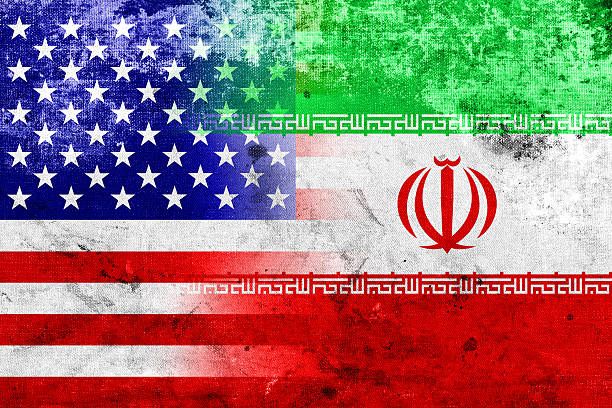
The first direct Iranian strike on a Gulf US ally has shattered the geographic boundaries of a conflict that Washington insists remains under control.
Iranian missiles and drones hit targets inside the UAE on Monday, igniting a large fire at an oil refinery and triggering emergency protocols across Abu Dhabi. Within hours, President Trump announced that the US Navy would begin escorting commercial vessels through the Strait of Hormuz, an operation that amounts to a limited naval confrontation with Iran whether the White House frames it that way or not. The ceasefire that the State Department declared intact as recently as Sunday is now a diplomatic fiction. US and Iranian forces exchanged fire over the strait on the same day Washington said the truce was holding.
The strike matters less for what it destroyed than for what it signals. Iran has spent months targeting Israel directly and clashing with US forces in the region. Hitting the UAE is qualitatively different. Abu Dhabi is an Abraham Accords signatory, a major US defence partner, and a significant node in Gulf refined oil supply infrastructure. Tehran's decision to strike it directly tells every Gulf capital that normalisation with Israel carries a military price tag.
The UAE appears to have absorbed that message and drawn the opposite conclusion. Within hours of the attack, reporting from the Jerusalem Post confirmed that Abu Dhabi is being pushed closer to Israel, deepening a defence relationship that was already accelerating before Monday's strike. Iran's strike did not fracture the Abraham Accords. It hardened them.
Prediction markets are pricing the immediate risks but have not yet absorbed the structural shift. The hottest contract, Iran airspace closure by May 8, trades at 18% on Polymarket with $2.59 million in 24-hour volume: a meaningful signal that traders see further escalation in the next 72 hours without treating it as a certainty. The probability that the US invades Iran before 2027 sits at 30%, a figure that has crept steadily higher but still implies traders believe Washington will manage the conflict short of a ground campaign. Regime collapse in Tehran by May 31 trades at just 3%, and the chance of a US-Iran diplomatic meeting by May 15 sits at 12%.
Read together, these markets describe a conflict that is widening geographically without accelerating toward either resolution or full-scale war. The Hormuz normalisation contract, at 2% by May 15, is the starkest signal: nobody expects shipping to return to normal. But neither do traders expect the kind of decisive American military action that would end the disruption. The pricing implies indefinite, grinding escalation with periodic shocks, exactly the environment the Gulf has spent decades trying to avoid.
Trump's warship announcement adds a new variable. Escorting commercial vessels through a contested strait is operationally indistinguishable from a naval engagement. If Iranian forces challenge an escorted convoy, the US will fire. If the US fires, the ceasefire collapses formally rather than merely in practice. Germany has already condemned the UAE strikes, suggesting a European pressure track through sanctions or NATO coordination may follow. But none of that changes the core dynamic: Iran has demonstrated the willingness to strike US allies, and those allies are responding by deepening the alliances Iran sought to punish.
The next 72 hours will determine whether the ceasefire survives in any form. Watch for three things: whether Iran closes its own airspace (the 18% contract is the market's real-time thermometer for imminent escalation), whether the first US-escorted convoy transits Hormuz without incident, and whether Abu Dhabi formalises the defence cooperation with Israel that reporting already suggests is underway. The war just got bigger. The question is no longer whether the conflict spreads beyond Israel and Iran. It already has.
New to Polymarket?
Sign up via our link and get 6 months of Future Times Pro free — worth £30. Learn more