Iraq Bombed Kharg Island 71 Times. Iran Never Lost It.
The US has already struck Iran's oil hub twice. Markets price a 10 per cent chance that sustained bombardment succeeds where Iraq's Tanker War failed.
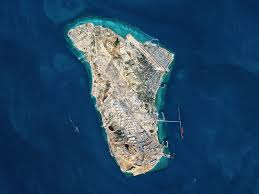
American forces hit Iran's primary oil export hub on April 3 and again on April 7, targeting infrastructure that handles roughly 90 per cent of the country's petroleum revenue. The strikes prompted a two-week ceasefire that has since lapsed without renewal. And yet on Polymarket, the probability that Kharg Island is "no longer under Iranian control" by May 31 sits at just 10 per cent.
That number looks low until you understand what it actually measures. The bet is not about whether bombs fall on Kharg. Bombs have already fallen. It is about whether Iran loses operational control of the island: the capacity to load tankers, maintain terminal infrastructure, and route crude to buyers. That is a far higher bar, and history explains why.
During the Iran-Iraq War, Iraqi jets bombed Kharg Island 71 times between 1984 and 1988. The damage was severe. Iran's response was not surrender but adaptation: engineers built a floating terminal at Larak Island near the Strait of Hormuz and rerouted exports around the destruction. Kharg's throughput dropped but never ceased. Full loss of control required something Iraq never achieved: either a ground presence on the island or total destruction of every export terminal simultaneously.
The parallel matters because the current US campaign is following a similar pattern of strikes without occupation. Air power degrades capacity. It does not, on its own, transfer control. The 10 per cent probability on Polymarket reflects exactly this distinction: traders pricing a scenario where sustained bombardment eventually overwhelms Iran's ability to reroute, without betting heavily that it will.
What makes the Kharg market editorially significant is its independence from two other Iran bets running simultaneously. Regime collapse by May 31 trades at just 4 per cent on Polymarket, backed by $2.6 million in 24-hour volume. A permanent US-Iran peace deal by the same date sits at 30 per cent with $1.3 million. And a full US invasion before 2027 prices at 34 per cent.
These are not overlapping bets. They describe three distinct futures. In one, diplomacy produces a deal and Kharg becomes irrelevant. In another, the regime falls and everything changes. The third is the grinding middle: no peace, no collapse, just incremental degradation of Iran's most critical economic asset. Markets price that middle scenario as more likely than regime change but far less likely than a negotiated settlement.
The 10 per cent sitting above the 4 per cent regime-fall figure is the sharpest signal. Traders believe Iran is more likely to lose its oil hub than its government. That inversion makes structural sense. Regimes survive what infrastructure cannot. The Islamic Republic has weathered sanctions, protests, and a Supreme Leader transition. Kharg Island's loading terminals do not have the IRGC's capacity for self-preservation.
Internal pressure reinforces the picture without contradicting it. Radio Free Europe reported on April 29 that Iran has executed 21 people and arrested more than 4,000 since the conflict began. A regime conducting mass arrests is a regime under strain, not a regime about to fall. Repression is historically a sign of consolidation, not disintegration. The 4 per cent collapse odds and the crackdown data tell the same story: the state is stressed but intact.
For energy markets, the implications are concrete. If Kharg's operational capacity degrades further without a peace deal, Iran's roughly 1.5 million barrels per day of exports face progressive disruption. That is not the catastrophic supply shock of a full Hormuz closure. It is a slower bleed, the kind that keeps oil elevated without triggering emergency reserves or diplomatic panic.
The watch point is the ceasefire vacuum. The two-week truce that followed the April 7 strikes expired without extension. No new diplomatic meeting is confirmed. The May 5 US-Iran meeting trades at 18 per cent. If that window closes empty, Kharg returns to the target list, and the 10 per cent probability starts to move. The Iran-Iraq precedent says it would need to move a long way before operational control actually changes hands.
New to Polymarket?
Sign up via our link and get 6 months of Future Times Pro free — worth £30. Learn more