Russia and Ukraine Agree an Easter Truce. The Money Says It Won't Last.
Moscow and Kyiv have agreed to stop shooting for 32 hours. Prediction markets are betting they start again.
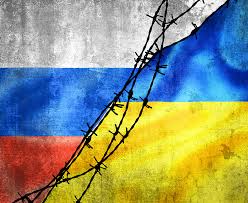
Russia and Ukraine announced a mutual ceasefire on Thursday to mark Orthodox Easter, the first formal pause in fighting both sides have accepted since the full-scale invasion began more than four years ago. The truce, set to cover a 32-hour window around the Easter holiday, drew immediate comparisons to the broader peace narrative now circulating through Western newsrooms. Bloomberg reported that a senior Zelenskiy aide sees Ukraine "nearing a deal" with Putin. Reuters followed with similar framing. For a few hours, the headlines read like the war might actually be ending.
The betting markets disagree. On Polymarket, traders have pushed $2.58 million through the April 30 ceasefire contract in the past 24 hours alone, one of the highest-volume war-related markets on the platform. The price: 5%. That is not indifference. That is $2.58 million worth of active conviction that this truce collapses and no lasting ceasefire follows within the month.
The gap between the news cycle and the money could hardly be wider. Diplomatic correspondents are writing about momentum. Traders with capital at risk are pricing in failure.
There are reasons for the scepticism. The 32-hour window is a religious gesture, not a ceasefire framework. It carries no verification mechanism, no enforcement body, no withdrawal schedule. Ukraine's initial response to Putin's announcement was conditional and cautious: Kyiv agreed, but made clear it expected violations. That caution tracks with history. Russia declared humanitarian corridors in 2022 and shelled them. It announced grain-export pauses and broke them. The pattern is well documented, and the market has internalised it.
The Institute for the Study of War recorded continued Russian offensive operations as recently as April 8, two days before the truce announcement. Structural military pressure on the front lines did not ease in the run-up to the ceasefire. The truce, in other words, emerged from a context of ongoing escalation, not de-escalation.
Look at the probability curve across time horizons and the signal sharpens further. Ceasefire odds sit at 5% by April 30, rising to 8.5% by May 31 and 11.5% by June 30 on Polymarket as of April 10. The slope is shallow. Markets see a marginally improving chance of peace over the next three months, but nothing resembling a breakthrough. The collective read is that even if diplomatic channels remain open, neither side is close to the kind of agreement that would satisfy a formal ceasefire resolution.
The Bloomberg and Reuters framing is not fabricated. There are real diplomatic contacts. Zelenskiy's inner circle has signalled flexibility. But "nearing a deal" and "ceasefire by month-end" are different claims, and the market is distinguishing between them with precision. Talks can continue for months without producing a binding halt to fighting. The $2.58 million flowing through the April contract is, in effect, a bet on that exact outcome: diplomacy without a ceasefire.
None of this means the truce is meaningless. A 32-hour pause saves lives, even if it changes nothing structurally. And the fact that both sides agreed to it at all, rather than one side declaring and the other refusing, is a small but genuine shift in tone. The question is whether tone converts to substance. On that, the market's answer is clear.
The number to watch is not the April contract. It is the June 30 market, currently at 11.5% with $558,000 in volume. If the Easter truce holds cleanly and talks accelerate, that figure will move first. If it stays flat through the rest of April, the market will have delivered its verdict: another ceasefire that changed the news cycle but not the war.
New to Polymarket?
Sign up via our link and get 6 months of Future Times Pro free — worth £30. Learn more