Trump Flies to Beijing. America's AI Advantage Stays Home.
The summit is near-certain but the US-China AI divide it cannot resolve is the real story.
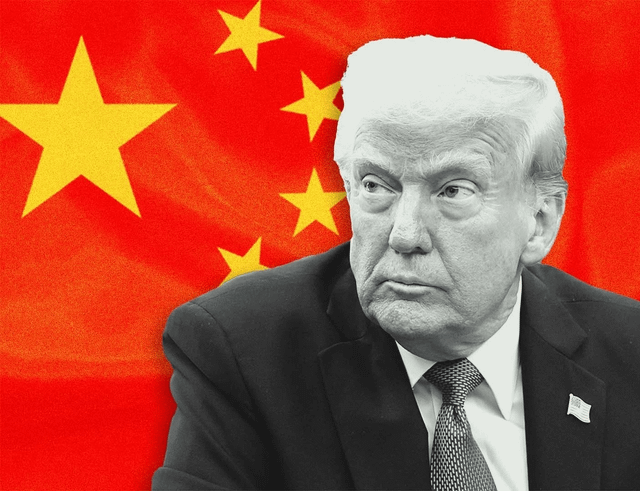
The summit between the world's two largest economies will produce handshakes, tariff adjustments, and photo opportunities. It will not resolve the divide that matters most: who controls the future of artificial intelligence.
President Trump confirmed on Sunday that he will visit Beijing this month, framing the trip around American AI superiority. Prediction markets price the visit at 92% by May 31 on Polymarket, with an 88% chance it happens before May 15. The trip itself is not in doubt. What it will accomplish is.
The structural reality underneath the summit is a technology split that no bilateral meeting can bridge. The United States builds frontier AI. Its companies, OpenAI, Anthropic, Google DeepMind, dominate model development. Nvidia's chips power the training runs. America sets the pace at the research edge. China does something different. It deploys AI at population scale: across manufacturing lines, logistics networks, surveillance systems, and consumer platforms serving 1.4 billion people. As one South China Morning Post columnist put it this week: 'America builds AI, China uses it.'
This is not a gap that closes with a trade deal. It is a structural divergence baked into each country's industrial base, regulatory posture, and strategic intent. And the single most important policy lever reinforcing that divergence, US chip export controls restricting advanced semiconductor sales to Chinese firms, is not on the summit agenda. No credible reporting suggests it will be. The controls remain the architecture of an AI containment strategy that predates Trump's second term and will outlast it.
Markets understand this. Trade deal odds sit at 42% on Polymarket, less than half. That figure, read alongside the 92% visit probability, tells the real story: traders expect the meeting to happen and expect it to produce nothing structural. The 50-point gap between visit certainty and deal probability is the market's way of pricing political theatre.
The timing of the summit coincides with a gathering that makes the divide visible from neutral ground. The ATxSummit in Singapore, running May 5 to 7, has convened government ministers, tech executives, and AI governance leaders from across Asia to chart AI deployment strategy for the region. Singapore's positioning is deliberate. It is neither aligned with Washington's containment framework nor dependent on Beijing's digital infrastructure. The conversations in Singapore this week are about building AI governance that works regardless of which superpower is in the room.
That third-way positioning is itself a signal. Southeast Asian governments are constructing regulatory and deployment frameworks for AI that do not assume US-China cooperation. They are planning for a world where the split is permanent. The ATxSummit's agenda, focused on cross-border AI governance, data sovereignty, and adoption at scale, reads like a blueprint for operating in a bifurcated technology landscape.
Meanwhile, Beijing is not standing still during the diplomatic overture. A Reuters investigation published in late April documented how China has been quietly expanding its economic pressure options through channels that no bilateral summit will address.
None of this will feature in the summit communique. Trump will claim progress on tariffs. Xi will offer carefully calibrated concessions on market access. The headline numbers will move. But the AI architecture, the chip restrictions, the competing deployment models, and the regional hedging by every major Asian economy will remain exactly where they are.
The question for investors and policymakers is not whether Trump goes to Beijing. He almost certainly will. It is whether the visit changes anything about the technology competition that will define the next decade. At 42% trade deal odds and zero movement on export controls, the market's answer is clear.
Watch the ATxSummit communique on Wednesday. If Singapore's framework avoids explicit alignment with either Washington or Beijing on AI governance, it will confirm what prediction markets already price: the split is structural, and the rest of Asia is building around it.
New to Polymarket?
Sign up via our link and get 6 months of Future Times Pro free — worth £30. Learn more