Markets Price a Frozen War as Third Putin Ceasefire Collapses
Prediction markets assign just 2% odds to Ukrainian capitulation and near-zero probability to Russian territorial gains as Easter truce disintegrates within hours, following the same pattern as two previous failed ceasefires.
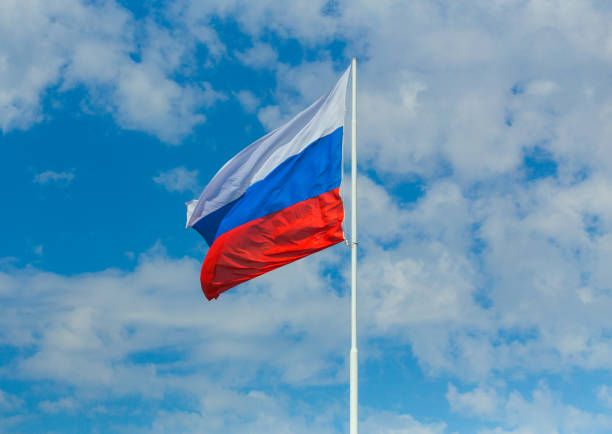
Ukraine's Easter ceasefire lasted hours before unravelling into the same recriminations that destroyed its predecessors. Prediction markets, unmoved by the collapse, continue to price the conflict as a deep stalemate with no resolution in sight.
The truce, announced unilaterally by President Vladimir Putin and conditionally accepted by Kyiv with open scepticism, took effect on April 12. Within hours, both sides were reporting hundreds of violations. Russia accused Ukraine of shelling civilian areas. Ukraine accused Russia of continuing offensive operations along the eastern front. Neither claim could be independently verified. No international monitoring mission was on the ground.
The pattern is now unmistakable. This is the third major ceasefire announced by Moscow to collapse since the full-scale invasion began. A Christmas truce in 2022 and a New Year ceasefire in early 2023 followed an identical trajectory: unilateral announcement, conditional acceptance, rapid disintegration, mutual blame. Each time, the brief diplomatic opening closed without producing any durable framework for negotiation. Each time, the war resumed exactly where it had paused.
What distinguishes this moment from previous ceasefire failures is the depth of market consensus on the underlying military reality. On Polymarket, where more than $12 million in combined liquidity backs contracts on the war's trajectory, bettors have reached a clear verdict. The probability that Ukraine recognises Russian sovereignty over occupied territories by the end of 2026 sits at 2%, backed by $2.4 million in volume. A contract on whether Russia captures Kostyantynivka, a key Donetsk city that would represent meaningful territorial advance, prices that outcome at approximately zero, with $5.8 million behind it.
These are not fringe positions. They represent the aggregated assessment of thousands of traders who have watched more than four years of grinding positional warfare produce neither breakthrough nor capitulation. The near-zero probability assigned to significant Russian territorial gains suggests bettors see Moscow's offensive capacity as fundamentally exhausted at current force levels. The 2% capitulation figure implies an equally firm conviction that Kyiv will not accept terms that concede sovereignty, regardless of battlefield pressure.
A separate contract pricing the removal of Putin before the end of 2026 trades at 10%, backed by $3.9 million. Even regime change in Moscow, the scenario most likely to alter the war's fundamental dynamics, is considered a long shot.
The ceasefire's collapse arrives at a moment when Washington's attention is visibly directed elsewhere. The Trump administration's escalating naval posture toward Iran in recent days has consumed diplomatic bandwidth that might otherwise have been applied to pressing both Moscow and Kyiv toward meaningful negotiations. The absence of sustained American pressure removes one of the few external forces capable of altering the calculus for either side.
For European capitals, the implications are sobering. A conflict that markets price as frozen rather than approaching resolution demands a different policy framework than one where a negotiated settlement appears plausible. Defence spending commitments, refugee integration, energy diversification and sanctions architecture all require different calibration if the baseline assumption is years of continued stalemate rather than months until a ceasefire.
The Kremlin's ceasefire announcements have come to serve a primarily rhetorical function. Each offer allows Moscow to position itself as the party seeking peace while losing nothing operationally. When the truce collapses, blame is distributed symmetrically in Russian state media, regardless of the facts on the ground. Ukraine's conditional acceptance, paired with vocal scepticism, reflects an understanding of this dynamic. Kyiv cannot refuse a ceasefire without handing Moscow a propaganda advantage, but it enters each truce expecting the same outcome.
What the prediction markets capture, and what the diplomatic language around ceasefires obscures, is the degree to which this war has settled into a structural equilibrium. Neither side possesses the military capacity to impose its preferred outcome. Neither side faces sufficient domestic or international pressure to accept the other's terms. The Easter ceasefire was not a failed peace initiative. It was the latest iteration of a ritual that both sides perform while the underlying conflict remains unchanged.
The 2% and the near-zero are not predictions of what will happen. They are running estimates of what has already happened: a war that neither side can win and neither side will stop.
New to Polymarket?
Sign up via our link and get 6 months of Future Times Pro free — worth £30. Learn more