Democrats won their biggest House majority since 1992. The shutdown fight comes before they take their seats
Future Times5 min read
In 30 seconds
A recount win by a few hundred votes in North Carolina has sealed a Democratic landslide. But the outgoing Republican Congress still has to fund the government by 11 December, and the White House has just sent its wish list.
- Traders put the chance of a shutdown by 12 December at 27%, up 8.5 points in a day but down from 40% a week ago
- Almost all the year-end shutdown risk sits on the 11 December deadline itself
- Senate Republicans are weighing a deal that funds the Pentagon but cuts off money for offensive operations in Iran
What it means
- MarketsA shutdown risk of roughly one in four is a nuisance for investors, not a debt-ceiling scare.
- Stocks and sectorsDefence contractors exposed to Golden Dome and submarine programmes have most riding on whether the White House's extra…
- PoliticsAny deal that limits Iran operations in December hands the incoming Democratic majority a precedent, and a lever, for…
- BusinessFederal contractors and airlines face the most immediate exposure.
What to watch
- 1 DecThe Democratic leadership vote on 1 December
- 11 DecWhether House Republicans can muster their members before funding lapses at the end of 11 December
The odds
Polymarket · live, 07:59 GMTUS government shuts down by 12 December
up 3 points over 7dfrom 21% a week ago27% when this was published
What would move these odds
- A Senate deal pairing Pentagon money with limits on Iran operations would push the odds down
- Senate Democrats closing ranks behind a "no war funding, no stopgap" line would push them up
- Schumer's leadership vote on 1 December, if it shifts the Democrats' negotiating stance
Now · 24%
Think the market's wrong? Add your forecast and see who's closer.
- Government shutdown by December 3136%up 3 points
- Next Senate Majority Leader: Chuck Schumer94%unchanged
- US announces end of Iranian blockade by December 3113%down 1 point
Virginia Foxx, the 11-term Republican, has called Democrat Chuck Hubbard to congratulate him on winning North Carolina's 5th district by a few hundred votes, and ABC News now counts at least 258 House seats for Democrats against 173 for Republicans, with four races still open. If Democrats hold the seats where they lead, they will have about 260, the most for the party since the Congress of 1991-93.
Democrats took 56% of the national House vote to the Republicans' 42%, according to an NPR analysis, a 14-point spread that NPR calls the biggest win for either party in 50 years.
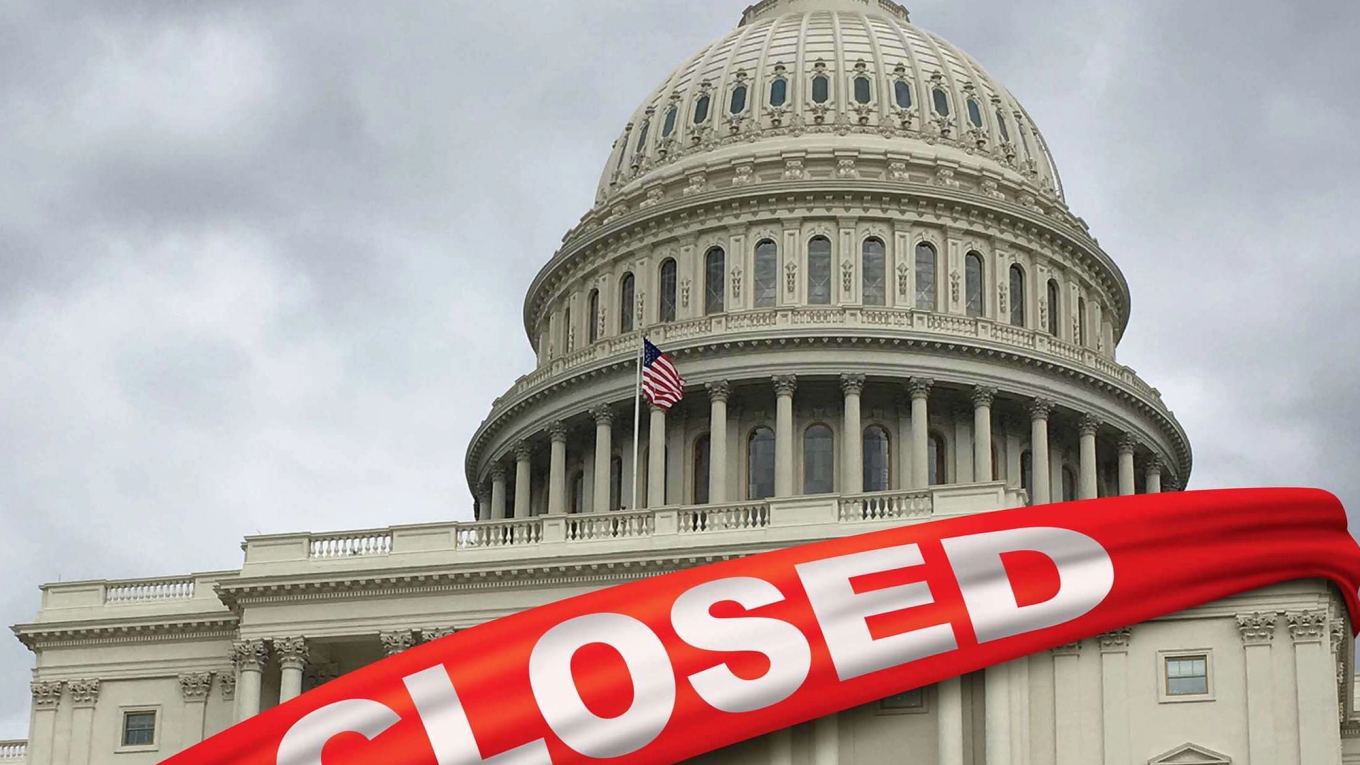
None of that counts until January. Republicans still hold both chambers of the outgoing Congress, government funding runs out at the end of 11 December, and the stopgap that keeps agencies open needs 60 votes in the Senate, so Republicans must win over some Democrats. On the morning of 24 November traders put the chance of a government shutdown by 12 December at 27%, up 8.5 points in a day.
A wish list lands on Capitol Hill
The newest development is a 12-page request the White House sent Congress late on Monday evening: a list of "anomalies", the exceptions to current spending levels that the administration wants written into any stopgap. It asks for a $5bn annualised funding rate for the Golden Dome missile shield, about $21.3bn in annualised increases for Navy submarine programmes, authority to start buying materials for a first "Trump-class" battleship, and more money for NASA's Artemis programme and wildfire suppression.
Democrats have signalled that the list is unlikely to pass as part of a short-term bill. Every extra item is one more thing to trade, or to fall out over, in under three weeks.
Why Democrats can afford to wait, and why some will not
A party that will control both chambers in January has little reason to concede much in December. Rosa DeLauro, the senior Democrat on House Appropriations, wants the stopgap to be as short as possible, and House Democrats have privately signalled that they are willing to push the Iran fight into 2027 rather than risk a shutdown, according to CNN's sources in both parties.
Senate Democrats sound firmer. Chris Van Hollen, Michael Bennet, Tammy Duckworth and Bernie Sanders have urged their leaders to insist that any short-term deal restrict the use of appropriated funds for the war against Iran. "If a government funding bill does not cut off spending on this illegal war, I will vote 'no' on that bill," Duckworth said. But many colleagues are wary of a shutdown before the holidays. "Nobody I've talked to thinks a shutdown makes any sense," said Jeanne Shaheen.
The Republican answer is more flexible than it first sounded. John Thune called Van Hollen's demand "short-sighted", but he also said of the Democrats on 19 November: "Particularly, their issue is going to be Iran, and I think there are ways you could address that in the appropriations bill." Senate leaders are now discussing a deal that would cut off funding for future offensive operations in Iran in exchange for Democratic votes to replenish the tens of billions the Pentagon says it needs.
A one-day risk, not a long siege
Traders see the danger as concentrated on the deadline itself. The chance of a shutdown at any point by 31 December is only 31.5%, not far above the 27% for 12 December. Once a stopgap passes, traders see little risk of the government closing later in the year.
Both numbers are well below the 40% and 43% of a week earlier, a fall that came as Republicans began talking about an Iran compromise. The past day's rebound has no single reported trigger; the White House list is the most obvious new fact. With only about $110,000 traded on the 12 December question, these are readings of direction more than precise gauges.
The leadership fight matters too. Schumer faces a contested vote on 1 December, and some Republicans fear the talks could shift after it. Traders give Schumer a 92.5% chance of being the next Senate majority leader, so they expect the negotiator to stay the same even if the caucus mood hardens.
Why the risk could be higher than traders think
The case for a higher risk is arithmetic. Republicans need Democratic votes to reach 60 in the Senate, and a firm bloc demanding an Iran cutoff could deny them. The House is shaky too: 21 Republicans missed votes on 19 November, and Speaker Mike Johnson called the absences "a great frustration". And Tom Cole, the House Appropriations chairman, has said a Republican Congress will not send the president bills he would veto.
Nor do traders think a funding rider would end the war quickly. They give only 15% to the US announcing an end to its blockade of Iran by 31 December, down 3 points in a week. A deal restricting future offensive operations would shape the war's next phase, not stop it.
What it means for markets, business and politics
Markets A shutdown risk of roughly one in four is a nuisance for investors, not a debt-ceiling scare. A lapse would delay federal data and payments, not debt service, so the bigger market effect would be a gap in official statistics heading into the new year.
Stocks and sectors Defence contractors exposed to Golden Dome and submarine programmes have most riding on whether the White House's extra money survives a stopgap; a plain extension at current levels would leave those increases waiting for the new Congress.
Politics Any deal that limits Iran operations in December hands the incoming Democratic majority a precedent, and a lever, for the full-year spending bills it will write from January.
Business Federal contractors and airlines face the most immediate exposure. One Senate Republican aide has warned of holiday travel disruption, recalling the airport problems of the last 43-day shutdown.
What to watch
The Democratic leadership vote on 1 December; the first stopgap text and whether it carries any Iran language; and whether House Republicans can muster their members before funding lapses at the end of 11 December. A published Senate deal would be the clearest sign the risk is fading.
Democrats have won the next Congress. The question for the next three weeks is whether they need to win this one too.