The White House says Trump, Putin and Xi will meet in Shenzhen. It has also taken Ukraine off the table
Future Times4 min read
In 30 seconds
The first three-way meeting of the American, Russian and Chinese leaders is now all but certain. Traders' hopes of a Russia-Ukraine ceasefire this year have slipped over the same week, because Washington says the war is not on the agenda.
- Moscow says Putin may still raise Ukraine with Trump in China, though Washington has no one-on-one meeting scheduled
- An energy truce before winter now looks half as likely as it did a week ago
- Traders do not see a ceasefire as more likely than not until mid-2027
What it means
- MarketsA three-way meeting with no Ukraine deliverable leaves the war's risk premium in European gas and power where it is…
- BusinessFor companies planning around Ukrainian reconstruction or a return to Russian trade, the horizon is mid-2027, not the…
- GeopoliticsBy keeping Ukraine off the agenda in Shenzhen, Washington answers, for now, Kyiv's fear of a deal made without it.
- Politics and policyTalks on cutting nuclear arsenals give Trump a result that does not depend on Moscow and Kyiv; an agreement merely to…
What to watch
- 16 NovTrump leaves for Manila on Monday 16 November and reaches Shenzhen on Wednesday 18 November
- 18 NovTrump leaves for Manila on Monday 16 November and reaches Shenzhen on Wednesday 18 November
- 19 NovThe Xi meeting and the trilateral follow on Thursday 19 November
The odds
Polymarket · live, 08:13 GMTRussia and Ukraine agree a ceasefire by 31 December
down 3 points over 7dfrom 10% a week ago
What would move these odds
- A Trump-Putin bilateral added to the Shenzhen schedule would lift the odds
- European delegates seated at next week's Abu Dhabi round would help
- More Russian strikes on Ukraine's power grid would push them lower
Now · 7%
Think the market's wrong? Add your forecast and see who's closer.
- Trump, Putin, and Xi seen together before 202797%up 12 points
- Where will Trump and Putin meet next in 2026: China98%up 8 points
- Russia x Ukraine Ceasefire by March 31, 202723%up 1 point
Donald Trump will end his trip to China next week by sitting down with Xi Jinping and Vladimir Putin, an unprecedented three-way meeting of the leaders of the three largest nuclear powers. The White House said on Friday that the meeting would come on the sidelines of the Asia-Pacific Economic Cooperation summit in Shenzhen, after Trump's bilateral talks and working lunch with Xi on the afternoon of Thursday 19 November.
What it will not be is a Ukraine summit. A senior US official told reporters that Trump would not discuss the war with Xi and Putin, because there is "a whole nother track" with the Russians and "China is not really a part of that track". The stated agenda is nuclear arms reduction, with Iran also expected to come up. "We do not expect to get to any kind of agreement," the official said, calling the meeting "the entry point, the first conversation".
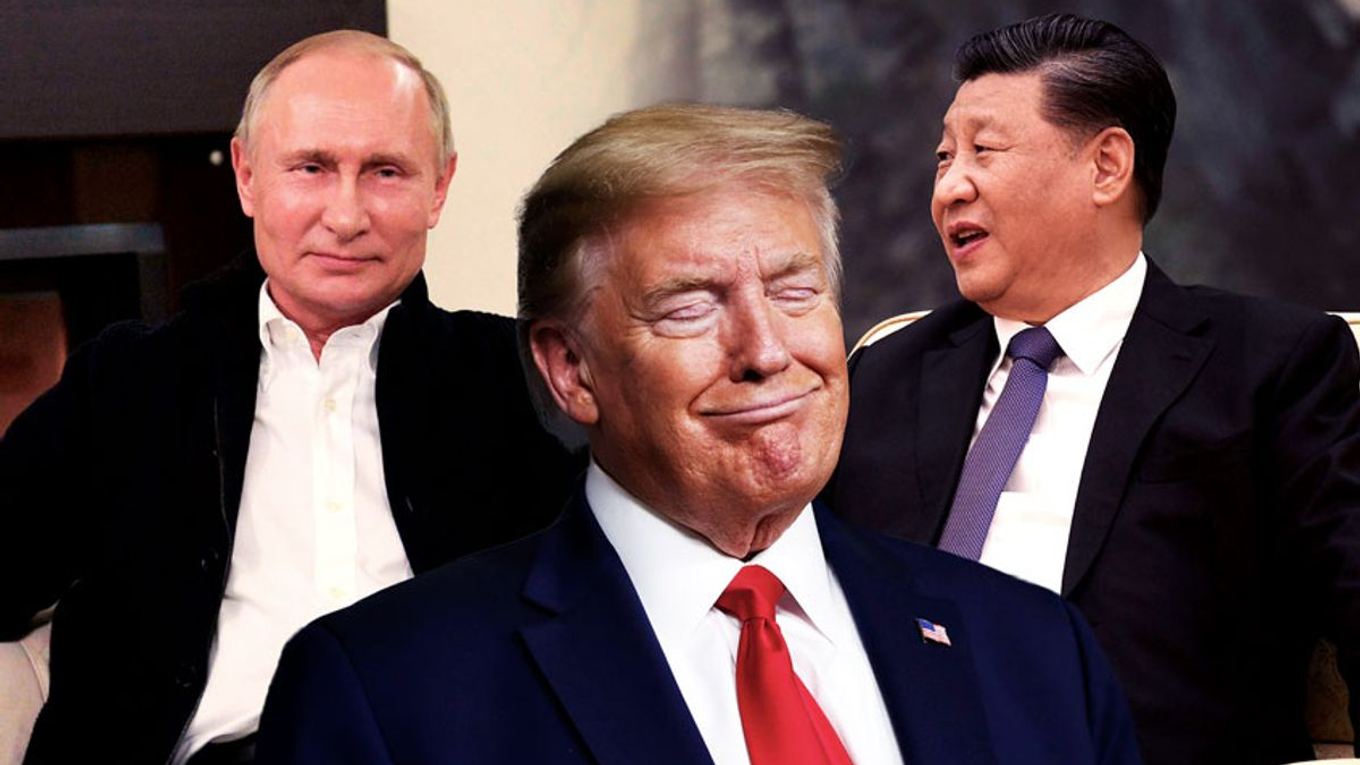
Traders have taken Washington at its word. They treat the photograph as close to certain and a ceasefire in 2026 as a long shot, and the gap between the two widened as the summit took shape.
A summit about warheads, not borders
The arms-control logic is plain. New START, the last treaty limiting American and Russian nuclear arsenals, expired in February. Trump rejected Moscow's offer to extend it for a year and asked instead for "a new, improved and modernized" deal that includes China.
Beijing has been more guarded. Its foreign ministry said earlier this month only that China "is in communication with relevant parties regarding a meeting between the three heads of state". The Kremlin called a meeting of the three leaders "extremely significant".
Moscow's account of the agenda differs from Washington's. After Steve Witkoff and Jared Kushner met Putin in the Kremlin on Thursday 12 November, Putin's aide Yuri Ushakov said Putin and Trump "may continue discussing the entire range of issues" on the war at their planned meeting in China. The White House says no Trump-Putin bilateral is scheduled; the two will appear together at APEC events and at the three-way meeting. Volodymyr Zelensky has said he is worried the meeting could be used to discuss a Ukraine deal without Kyiv.
The photo is priced. The deal is not
As of 14 November, traders give a 95% chance that Trump, Putin and Xi are seen together before 2027, up from 84% a week earlier. They give 96% to Trump and Putin's next meeting taking place in China.
Over the same week, the chance traders give to a Russia-Ukraine ceasefire by 31 December fell from 11% to 7%, on more than $2mn of trading. The summit's confirmation added nothing to it.
Further out, the picture is of a deal that arrives in 2027, not this winter. Traders put a ceasefire by 31 March at 23%, a ceasefire agreement by 30 June 2027 at 53% and one by the end of 2027 at 71%. The point at which a settlement becomes more likely than not sits around the middle of next year.
The sharpest move was on the narrowest deal. The chance of a Russia-Ukraine agreement to stop strikes on energy infrastructure by 31 December halved in a week, from 45% to 23%. Of Ukraine's proposals for energy, air and sea truces, Sergei Lavrov, Russia's foreign minister, said on 3 November: "None of this is for peace." The Abu Dhabi round that preceded the envoys' Kremlin visit, the first meeting of Russian, Ukrainian and American officials in nine months, did not change that.
Signs of a real settlement barely register: traders give 5.1% to Trump, Putin and Zelensky being seen together before 2027, and 4% to Ukraine recognising Russian sovereignty over its territory by the end of the year.
Why the doubters could be wrong
The strongest case against the market is that summits create their own momentum, and Ushakov has said openly that Putin intends to talk about Ukraine. Europe has also gained ground. EU leaders meeting in Dublin on 13 November agreed that Britain, France, Germany, Italy and Poland, plus the EU's institutions, would represent Europe at the next talks, which Kushner and Zelensky said would be in Abu Dhabi next week. The Kremlin has not agreed, saying Europe must first show it is ready to contribute.
For the market to be wrong, Shenzhen would need to produce what Washington says it will not: a Trump-Putin conversation that moves Moscow off its demand to settle the war's "root causes" before any truce. Russia's refusal to pause even its strikes on power plants makes that hard to see by Christmas.
What it means for markets, business and geopolitics
Markets A three-way meeting with no Ukraine deliverable leaves the war's risk premium in European gas and power where it is through winter.
Business For companies planning around Ukrainian reconstruction or a return to Russian trade, the horizon is mid-2027, not the first quarter. The 26-27 November meeting on Ukraine's financing, with a €70bn gap looming in 2027, matters more to them than the Shenzhen photo.
Geopolitics By keeping Ukraine off the agenda in Shenzhen, Washington answers, for now, Kyiv's fear of a deal made without it. It also hands Beijing a stage as host without asking it to take a side in the war.
Politics and policy Talks on cutting nuclear arsenals give Trump a result that does not depend on Moscow and Kyiv; an agreement merely to keep talking is likely to be presented as the summit's success.
What to watch
Trump leaves for Manila on Monday 16 November and reaches Shenzhen on Wednesday 18 November; the Xi meeting and the trilateral follow on Thursday 19 November. Watch whether a Trump-Putin bilateral is added to the schedule, whether Europe takes its seat in Abu Dhabi, and whether Russia's strikes on Ukraine's grid ease. A ceasefire by the end of the year above 15% would mean traders think Shenzhen changed something.
The three leaders will get their photograph. Ukraine will have to wait for its deal.