Beijing's 2027 Military Deadline Changes the Taiwan Calculus
The PLA's modernisation target gives Xi a capability he does not yet have. Prediction markets are pricing today's risk, not tomorrow's.
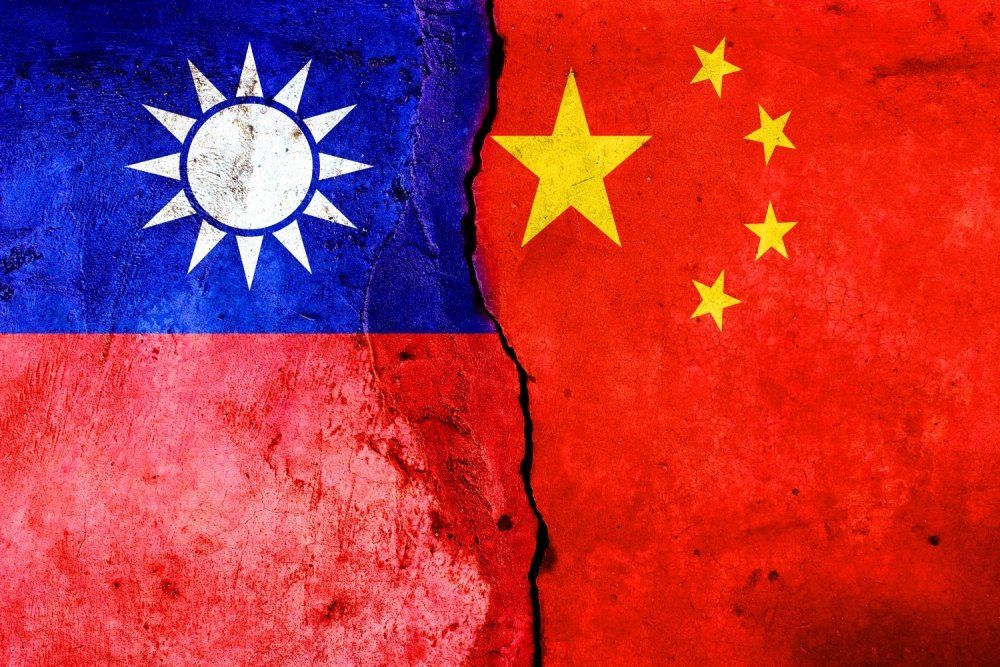
China's Liaoning carrier group sailed through the Taiwan Strait last week while PLA naval forces ran live-fire exercises off Taiwan's eastern coast. Taipei scrambled jets. Washington said nothing new. Prediction markets registered the provocation at 7 cents on the dollar: the probability, according to Polymarket, that China invades Taiwan before 2027.
That number deserves scrutiny. Not because an invasion is imminent, but because the market structurally underweights the period that follows.
The "before 2027" contract resolves in roughly eight months. It captures neither the completion of Xi Jinping's military modernisation programme nor the opening of Taiwan's 2028 presidential campaign season. Both events fall just outside the market's horizon. Traders buying "no" at 93 cents are making a defensible near-term bet. They are also missing the point.
Xi set the People's Liberation Army a public deadline: be capable of "winning wars" by 2027, the PLA's centenary. Pentagon assessments published annually since 2020 have tracked this target with increasing alarm. The programme encompasses naval expansion, amphibious lift capacity, integrated joint command, and anti-access systems designed to hold US carrier groups at distance. None of these capabilities switch on overnight. But the 2027 milestone marks the moment Beijing's military planners believe they cross from aspiration to operational readiness.
The recent personnel purges reinforce the timeline rather than undermining it. MERICS flagged in February 2026 the "unusual speed" with which Xi has removed senior PLA officers deemed insufficiently loyal or combat-ready. Purges signal internal problems, certainly. They also signal a leader determined to have the right commanders in place before the deadline arrives.
April's diplomatic choreography tells a parallel story. Xi's meeting with KMT leader Ma Ying-jeou on April 11 was widely reported as a thaw. The framing misreads Beijing's intent. By cultivating a political interlocutor in Taipei, Xi is not softening coercion. He is demonstrating that Beijing already has a governance partner on the island, sidelining the ruling DPP and establishing the optics of legitimate engagement. The meeting was not a peace signal. It was a precedent.
Taiwan's 2028 presidential election sharpens the pressure. The DPP-KMT contest will determine whether Taipei's next leader tilts toward independence or accommodation. Beijing has historically ratcheted military and economic pressure in the months before Taiwan votes, seeking to steer the electorate toward candidates less hostile to unification. The window between PLA modernisation completion in 2027 and the 2028 vote creates a period of maximum leverage for Xi: military capability arrives just as Taiwan's political direction is most malleable.
Prediction markets currently price this entire sequence at 7% on Polymarket as of 28 April 2026. The figure reflects the near-term reality accurately. An amphibious invasion within eight months remains a tail risk. But the contract's structure obscures the more consequential question: what happens in the 2027 to 2029 corridor, when capability, political timing, and US attention converge?
The simultaneous military signalling adds friction. PLA exercises ran concurrently with Balikatan 2026, the US-Philippines joint exercise programme, last week. Both sides were demonstrating resolve to overlapping audiences. The risk of miscalculation in such environments is not theoretical. It is the scenario that keeps Indo-Pacific defence planners awake.
Seven per cent is not wrong today. It may be the most dangerous number in geopolitics by next year. The market to watch is not the one that resolves before 2027. It is the one that covers what comes after.
New to Polymarket?
Sign up via our link and get 6 months of Future Times Pro free — worth £30. Learn more