Europe Lost Its Trump Whisperer at the Worst Time
The EU's most reliable back-channel to the White House is shutting down weeks before the tariff clock restarts.
The EU's most reliable back-channel to the White House is shutting down weeks before the tariff clock restarts.
Giorgia Meloni spent two years cultivating something no other European leader could claim: a genuine working relationship with Donald Trump. She visited Mar-a-Lago. She attended the inauguration. She positioned Italy as the bridge between Brussels and MAGA Washington. That bridge is now buckling under its own weight, and the timing could not be worse for the European Union.
The Guardian reported Monday that Meloni's Trump alliance has become a domestic liability. Growing unease within her own coalition has forced the Italian prime minister to distance herself publicly from Washington. Al Jazeera, CNN, and the Associated Press have tracked the same trajectory over three weeks: what began as strategic proximity has curdled into political risk. Meloni is no longer leaning in. She is pulling back.
This matters far beyond Rome. Meloni was not merely an ally of convenience. She was the EU's informal intermediary, the leader Trump actually picked up the phone for. Without her, the European Commission must negotiate directly with a White House that views Brussels as a regulatory adversary, not a partner. And that negotiation has a hard deadline.
Treasury Secretary Scott Bessent signalled in early April that tariff re-escalation on metals, steel, and autos would take effect in July 2026 unless bilateral deals were concluded. That signal was not a bluff. EU steel exports to the United States have already fallen roughly 30 per cent since tariff uncertainty intensified, according to Euronews data from February. The damage is accumulating before re-escalation has even formally begun.
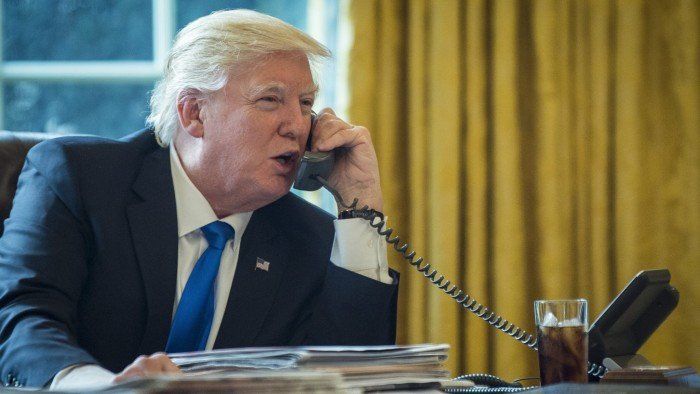
Prediction markets currently price a 72% probability that Trump speaks to European Commission President Ursula von der Leyen before April ends, on Polymarket as of 28 April. That figure sounds like diplomacy. It is not. The call, if it happens, is about one thing: whether the EU can secure a 90-day pause mechanism similar to the framework Bessent has offered other trading partners. A pause is not a deal. It is a holding pattern that delays July's pain while producing a photo opportunity Brussels can use to buy political cover at home.
The European Commission has been pushing for tariff relief since Davos in January. Von der Leyen framed it as mutual interest. Bessent framed it as leverage. As of mid-March, the Council on Foreign Relations confirmed that no EU exemption had been agreed. Nothing in the public record suggests that has changed.
What has changed is the EU's ability to work the margins. Meloni's value was never as a formal negotiator. It was as a temperature check, a back-channel that could relay European concerns in language the Trump administration would hear. With that channel closing, Brussels is left with institutional diplomacy alone: formal requests through formal channels, processed by a White House that has shown little interest in Brussels formality.
The sectors at stake are not abstract. Steel, aluminium, and automotive manufacturing employ millions across Germany, Italy, France, and the Benelux countries. July re-escalation would compound the 30% export decline already recorded, at a moment when European industrial output is contending with elevated energy costs from the ongoing Hormuz disruption. The European Central Bank's rate path adds another constraint: any tariff shock that feeds into imported inflation narrows Frankfurt's room to cut.
The question is not whether Trump and von der Leyen speak. At 72%, markets treat that as near-certain. The question is what that conversation produces. A 90-day pause would give Brussels breathing room through the autumn. Anything less would leave European exporters facing the full force of re-escalation with no diplomatic runway and no informal intermediary to work the phones.
The April window is closing. Summer recess makes third-quarter legislation effectively impossible in both Washington and Brussels. If this call does not unlock a pause mechanism, the EU enters July with tariffs rising, steel exports already damaged, and the one leader who could broker a quiet understanding choosing, for the first time, to stay quiet.
New to Polymarket?
Sign up via our link and get 6 months of Future Times Pro free — worth £30. Learn more