Oil is sliding on hopes of an Iran deal. Tehran's price for reopening Hormuz is a US climbdown first.
Crude fell and Dow futures jumped 507 points as the Qatari prime minister went to the White House. But Washington says there is no breakthrough, and the markets that track ships and the blockade are not buying the optimism.
Future Times4 min read
The odds
Polymarket · live, 03:08 GMTUS announces end of Iran blockade by 31 December
down 8 points over 7d39% when this was published
Now · 35%
Think the market's wrong? Add your forecast and see who's closer.
- What will WTI Crude Oil (WTI) hit in November 2026: ↑ $10020%down 52 points
- US announces end of Iranian blockade by November 3014%down 11 points
- US announces end of Iranian blockade by March 3166%up 2 points
Key points
- Crude is about 3% lower, but Iran wants sanctions and the blockade lifted before talks start
- Traders see Hormuz traffic back to normal by year end at only 8.5%
- A Fed hike in December is still priced at 76.5%, despite cheaper oil
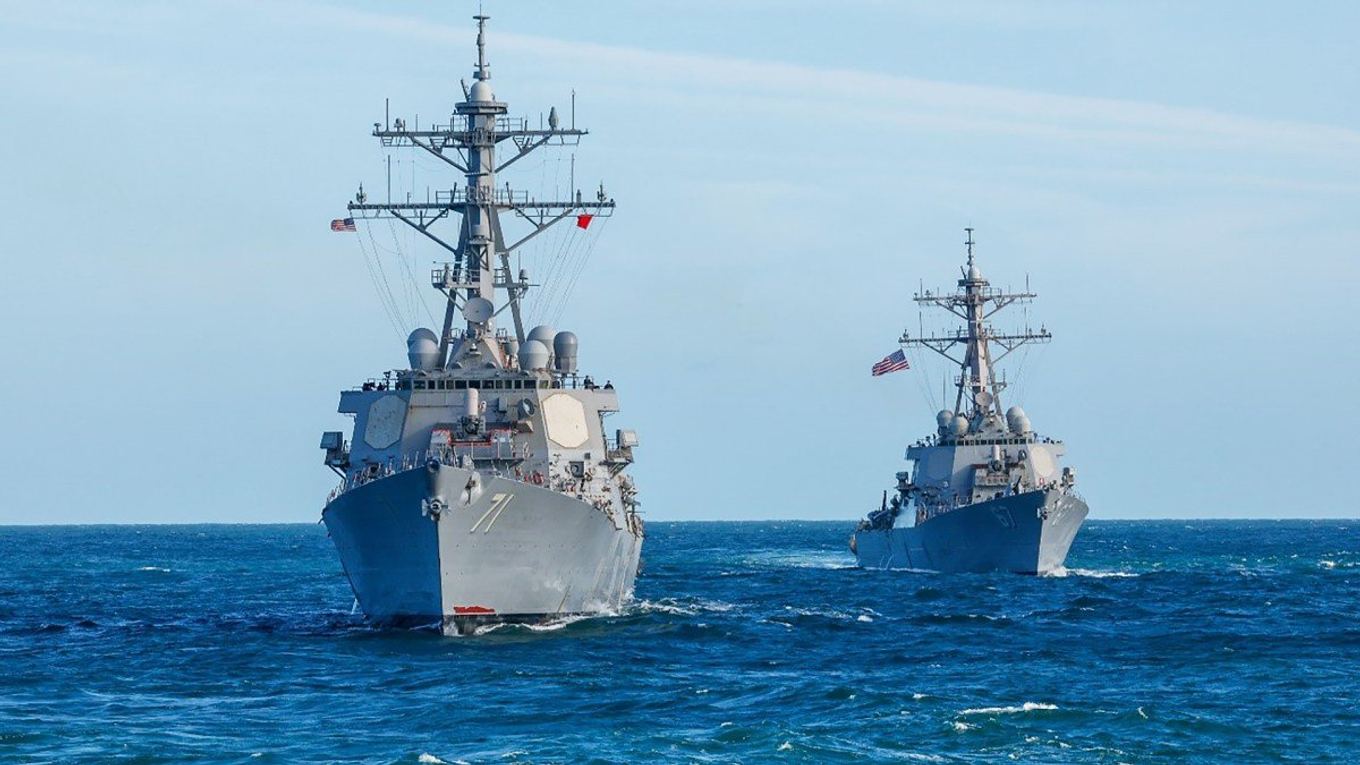
Futures tied to the Dow Jones Industrial Average jumped 507 points, or 1%, before the New York open on Monday as oil fell. US crude slipped almost 3% to around $88 a barrel and Brent to about $95, after settling at $98.32 on Friday. The trigger was diplomacy: Qatar's prime minister, Sheikh Mohammed bin Abdulrahman Al Thani, was due at the White House to meet Donald Trump and Vice President JD Vance, carrying Iran's latest proposal.
In a 60 Minutes interview broadcast on Sunday, Trump said of escalating the war: "I'm not looking to. I don't think there's any reason to." Little of substance has changed, though. The same prices that are rallying on a deal also say the ships and the blockade will not follow quickly.
A deal on offer, on terms Washington has rejected
Iran's foreign minister, Abbas Araghchi, has proposed a two-day sequence. On day one the United States takes a set of steps; on day two the Strait of Hormuz reopens. Iran's foreign ministry called the cut from a seven-day timetable a "sign of goodwill".
The price of those two days is steep. Iran wants the sanctions imposed since the June agreement collapsed lifted, oil waivers restored, frozen funds released (including money held in Qatar), a Hormuz route agreed with Oman recognised, and the war ended "on all fronts". Its foreign ministry says the US naval blockade must end too.
Secretary of State Marco Rubio, speaking on Sunday, called some of those demands "outrageous and ridiculous and really not realistic" and said: "I wouldn't say we're at the verge of a breakthrough." Trump told CNN new strikes are "highly unlikely" if Iran signs "a very strong agreement", and that it depends on whether it does.
The blockade is tightening, not loosening
On Saturday US Central Command said it had disabled a cargo ship, the M/V Huda, in the Gulf of Oman for trying to run the naval blockade. It also announced Task Force Iron Gate, extending the effort to Iran's land borders and the Caspian Sea; Trump said on Sunday it is "in full force and effect". Iran's state broadcaster said four tankers were halted in the Strait of Hormuz over 24 hours.
What the other markets say
Oil traders are leaning towards a deal. Traders put the chance that US crude touches $85 at some point in November at 80.5%, up 43 points in a week, and the chance it reaches $100 at 31%, down 14.5 points in a day. Both come from small markets, with roughly $60,000 of trading each, so they show direction more than precision.
The markets tied to the political and physical outcomes are much more cautious. Traders put the chance the US announces an end to its blockade of Iran by 30 November at about 20%, by 31 December at 39% and by 31 March at about 70%. A political resolution is likely, but not soon.
The gap to the physical world is wider. Traders see Hormuz traffic returning to normal by 30 November at 3.5% and by 31 December at 8.5%. A US-Iran agreement on Hormuz by the end of the year is rated at 36%, and a final nuclear deal at 9.5%, down 4 points in a week.
Crude is paying for the chance of a deal being signed. It is not paying for tankers moving normally, and it is not paying for the harder diplomatic question of Iran's nuclear programme. Even a signed Hormuz agreement leaves insurers and crews to reassure, which is why normal traffic is priced far below the agreement itself.
Why the optimists could be right
The strongest case for a faster outcome is political. Democrats won both chambers of Congress in the midterms, high petrol prices hurt Republicans, and Trump faces pressure to end a war now more than eight months old. Iran has just shortened its own timetable. A face-saving formula on funds or sanctions could move quickly, and traders have already added 5 points in a day to the chance the blockade ends by 31 December.
The risk runs the other way too. Trump has named targets, including 38 bridges, and says carriers are in place. Crude is still about 50% above its level a year ago. Renewed fighting would push it back towards $100, as the 31% price for that level suggests traders still allow.
What it means for markets, business and politics
Markets Oil has priced a chance of peace, not peace. With US crude near $88 and Brent near $95, a failed meeting would reverse Monday's move quickly. A signed deal would cut prices further, but the shipping evidence implies a slower, shallower decline than the first drop.
Stocks and sectors Airlines such as Delta and United, and other fuel-heavy industries, gain most from cheaper crude. Producers such as Exxon, Chevron and Occidental lose the most. Monday's index rally rests on the same hope.
XOMCVXOXYDALUALCentral banks Traders still put the chance of a Federal Reserve rate rise on 9 December at 76.5%. A lasting fall in energy prices is the quickest route to take that off the table, and Monday's move has not yet done it.
Business and supply chains Companies planning around the return of shipping should assume disruption into 2027. Freight costs, insurance and delivery times stay elevated while the blockade and ship attacks continue.
Geopolitics Washington and Tehran disagree on sequence. Iran wants US steps first; the US wants a strong agreement before it moves. Whoever blinks first sets the oil price.
What to watch
The first test is the readout from the White House meeting with the Qatari prime minister, and whether any US official signals movement on sanctions or frozen funds. Next come the 30 November date for the blockade and the Fed's 9 December decision. Daily counts of tanker transits through Hormuz will show whether a deal on paper reaches the water.
Crude has bet on a handshake. The ships are waiting for something much harder to fake.