Trump now sees no reason to escalate the Iran war. Ending his blockade is a different matter
The president and his secretary of state spent Sunday sounding like men looking for an exit. Traders think the strikes may pause within weeks, but still expect the naval siege of Iran's ports to outlast the year.
Future Times4 min read
The odds
Polymarket · live, 03:18 GMTUS announces end of Iran blockade by 31 December
down 8 points over 7d36% when this was published
Now · 35%
Think the market's wrong? Add your forecast and see who's closer.
- US announces end of Iranian blockade by November 3014%down 11 points
- US announces end of Iranian blockade by March 3166%up 2 points
- US announces end of Iranian blockade by November 153%down 6 points
Key points
- Trump told 60 Minutes he is "not looking" to escalate; Rubio called the war necessary but not "necessarily popular"
- Traders put a two-week pause in US strikes starting by 30 November at 57%, but an end to the blockade this year at 36%
- Invasion odds fell 6 points in a week to 11.5%: the war is shifting from bombs to economic pressure
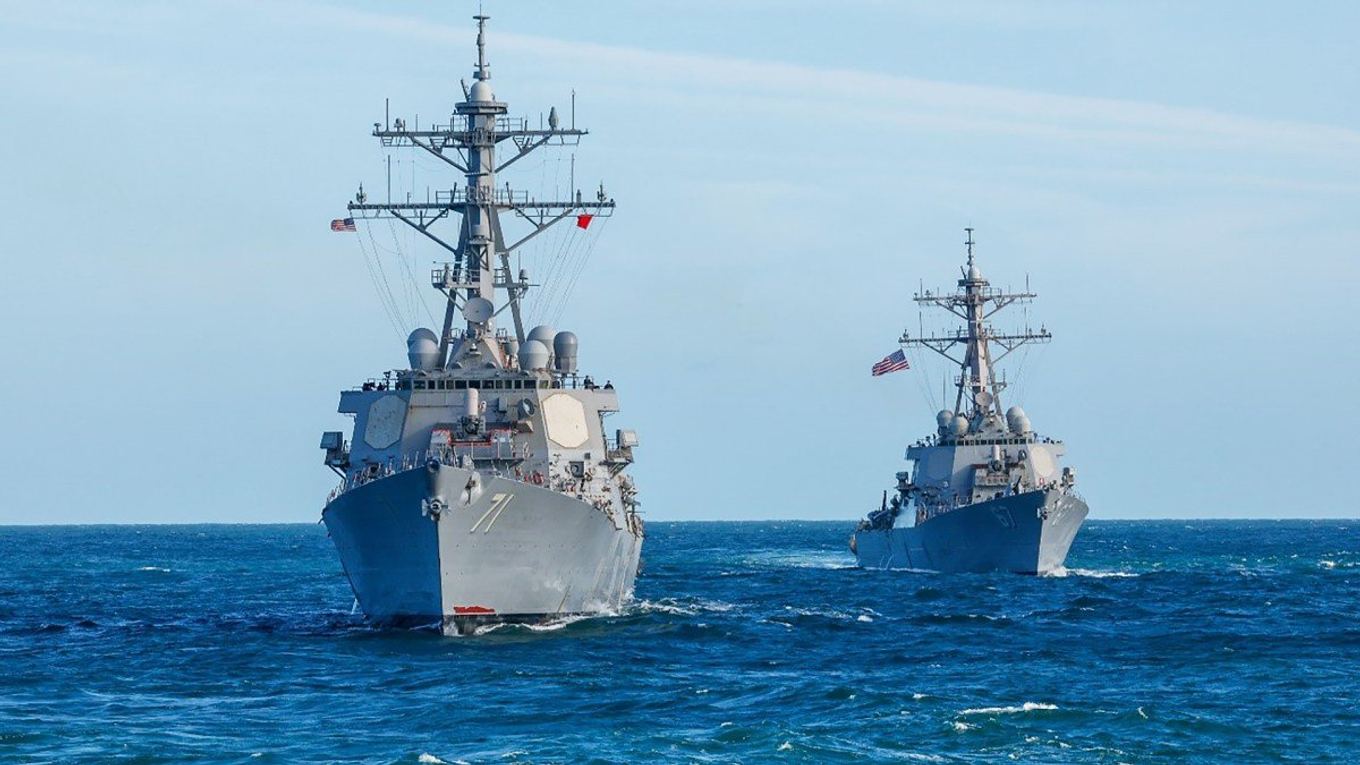
"Well, I'm not looking to. I don't think there's any reason to." That was Donald Trump's answer when 60 Minutes asked him, in an interview CBS aired on 8 November, whether he would escalate the war with Iran. He still defended starting it in late February: "I think, historically, this will be a very good decision." Then came a rare concession: "Is it a good decision for today and tomorrow? Maybe not."
Marco Rubio made the same case in a different key. Speaking in Florida on 8 November before flying to a G7 foreign ministers' meeting in Paris, the secretary of state said the war was not "necessarily popular" but was "necessary" because Mr Trump had "identified a very real threat" in Iran's nuclear programme.
This is a change of tone, not of policy. Traders think a pause in American strikes is roughly a coin flip by the end of November, but still see an announced end to the naval blockade of Iran's ports as unlikely before the new year.
A softer voice after a hard election
The backdrop is the 3 November midterms, in which Republicans lost Congress. Mr Trump has accepted that the war, and the higher petrol prices that came with it, played a part in the defeat. He told CNN that fresh strikes were "highly unlikely" if talks produce a "strong agreement", while keeping a list of targets, including 38 bridges, should fighting resume.
Tehran seized on the remarks. Abbas Araghchi, Iran's foreign minister, wrote on X that "Americans are evidently sick and tired of Israel bamboozling US administrations into Forever Wars."
Nothing on the ground has eased. US forces struck Iranian targets, including air defences, at least twice in the week to 8 November, and on 7 November disabled a commercial ship trying to breach the blockade. The same day Central Command set up Task Force Iron Gate to choke off weapons, dual-use technology and "illegal revenue streams" crossing Iran's land borders and the Caspian Sea. Iran's Revolutionary Guards dismissed it: "The Iron Gate plan is merely wordplay," said their spokesman, Hossein Mohebbi.
Rubio sees no breakthrough
The diplomacy is stuck on the blockade. Iran says it will not negotiate on its nuclear activities until the US ends the blockade, lifts sanctions, unfreezes assets, pays compensation and halts hostilities across the region, including Israeli operations in Lebanon. Qatar, the chief mediator, and others have floated an interim solution, and Mr Trump meets Qatar's prime minister, Sheikh Mohammed bin Abdulrahman Al Thani, at the White House on 9 November.
Mr Rubio was blunt about the odds. "I wouldn't say we're at the verge of a breakthrough," he said, adding that "the Iranian demands are simply not just unacceptable." In Paris, where France has signalled there will be no joint communiqué, he will discuss Iran alongside Ukraine, energy and artificial intelligence.
Quieter skies, same siege
Markets separate the two halves of Mr Trump's message. As of 9 November, traders put the chance that a two-week stretch with no US air or missile strikes on Iranian soil begins by 15 November at 42%, by 22 November at 48%, by 30 November at 57% and by 31 December at 81%. On less than $90,000 of trading for each date, these are early readings, but they make a lull more likely than not before December.
The blockade is another story. The chance that Washington announces an end to it by 30 November is 19%, and by 31 December 36%, down five points in a week. Only by 31 March does it reach 68%, which puts the market's central expectation in the first quarter of 2027.
The gap is the story. A pause in bombing costs Washington little. Lifting the blockade means surrendering the leverage that Central Command says has kept more than $25bn of Iranian crude off the market in recent months, and it heads Tehran's list of preconditions. Traders expect the guns to quieten well before the pressure eases.
The rest of the evidence agrees. The chance of a US invasion of Iran before 2027 has fallen six points in a week to 11.5%. A senior US-Iran diplomatic meeting is priced at 16% by 30 November and 39% by 31 December, close to the odds of a blockade announcement in that window: consistent with the blockade ending only as part of a deal struck face to face.
What could prove traders wrong
The fastest route to an early end is an interim deal through Qatar that swaps nuclear concessions for a suspension of the blockade, giving Mr Trump a win before Congress changes hands in January. Against that, Mr Rubio's language, the new land-border task force and continuing strikes suggest the administration wants more pressure, not less, before it gives up its main bargaining chip.
What it means for markets, business and politics
Markets a pause in strikes without an end to the blockade leaves Iranian crude exports curtailed, so oil keeps a supply premium even as escalation risk fades. The bigger price move would come from a blockade announcement, not quieter skies.
Stocks and sectors shippers, insurers and refiners exposed to Gulf routes face blockade-era costs into 2027 on current pricing, while defence stocks lose some support as invasion odds fall.
Politics Mr Trump is softening his tone for a post-midterm electorate without conceding substance, so the new Democratic Congress is likelier to fight him over war powers and costs than over escalation.
Geopolitics Iron Gate pushes enforcement towards the Caspian, where Russia is a trading partner of Iran, raising the chance of friction with Moscow even as the Gulf front cools.
What to watch
Any read-out from Mr Trump's meeting with Qatar's prime minister on 9 November that mentions an interim framework; the G7 talks in Paris on 9 and 10 November; and any US strike on Iranian soil, which would restart the clock on a two-week pause. A rise above 50% in the odds of a blockade announcement by year end would be the clearest sign the talks have turned.
Washington has stopped talking like it wants a bigger war. It has not yet started talking like it wants to give up the blockade.