Russia and Ukraine hinted at give on land in Abu Dhabi. A deal is still a 2027 story.
Nearly four hours of US-brokered talks produced talk of a prisoner swap and private flexibility on territory. Traders still put a ceasefire this year at 7.5% and see an agreement as more likely than not only by late spring 2027.
Future Times5 min read
The odds
Polymarket · live, 03:22 GMTRussia and Ukraine reach a ceasefire by 31 December
down 3 points over 7d
Now · 8%
Think the market's wrong? Add your forecast and see who's closer.
- Russia x Ukraine ceasefire agreement by March 31, 202736%up 2 points
- Russia x Ukraine ceasefire agreement by April 30, 202742%up 1 point
- Russia x Ukraine ceasefire agreement by May 31, 202753%up 1 point
Key points
- Russia and Ukraine held their first direct talks in nine months, and both sides are said to be privately flexible on territory
- Traders give a ceasefire by 31 December 7.5%, down 3 points in a week
- An agreement only becomes more likely than not between April and May 2027
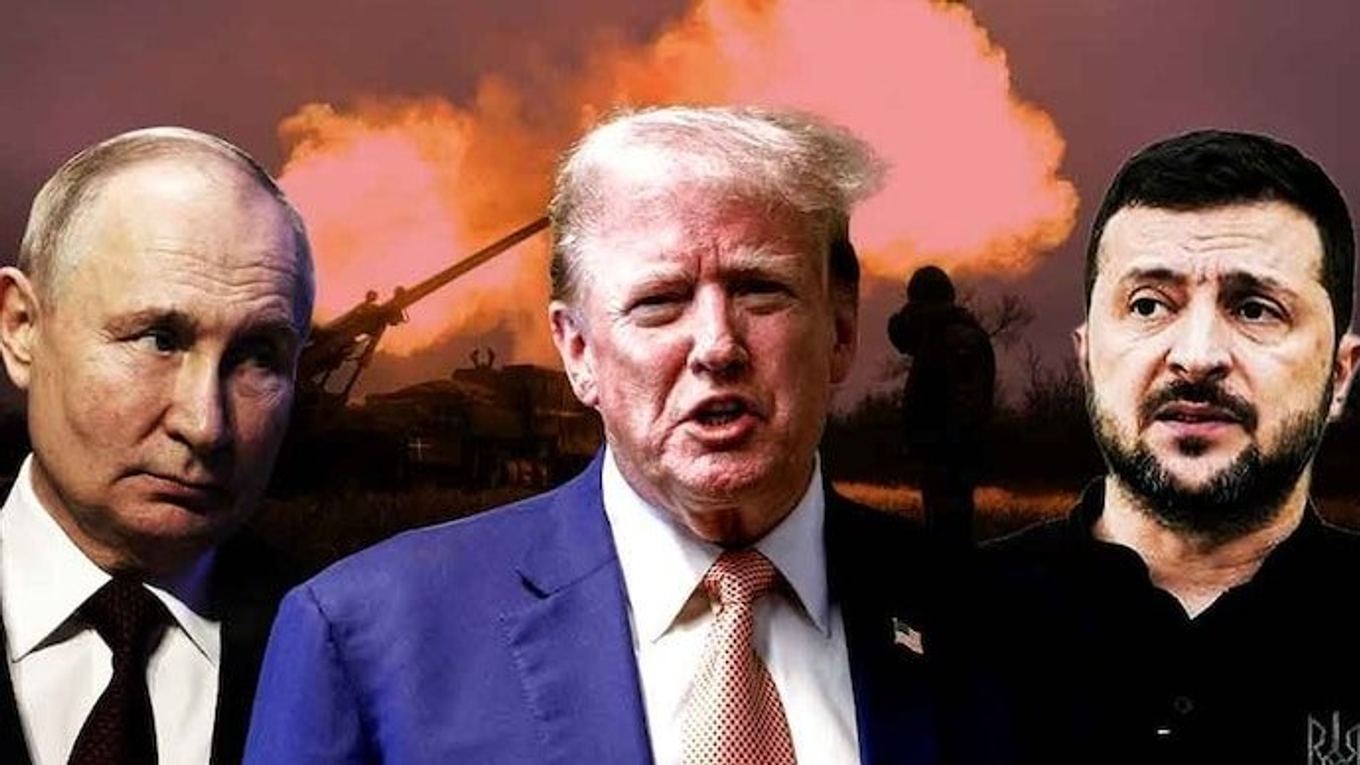
For the first time since February, Russian and Ukrainian negotiators sat at the same table on Tuesday. The opening day of US-brokered talks in Abu Dhabi ran for nearly four hours, and Volodymyr Zelenskyy called it "constructive and quite substantive". A senior Ukrainian official said the two sides discussed a large-scale prisoner exchange, with details to follow in the coming days.
The more striking signal came before anyone sat down. A US official told the BBC that both sides were showing "a little bit of flexibility, privately" over who controls eastern Ukraine after the war. It is the first hint in months that the Donbas, which has sunk every previous round, is open to discussion.
Traders are not yet treating it as a breakthrough. As of 10 November, they give a ceasefire by 31 December a 7.5% chance, down 3 points in a week, and put a ceasefire agreement only slightly better than even by the end of June 2027. The talks have begun; the market thinks a settlement is still a year of bargaining away.
Who was in the room, and what they want
Russia sent the Kremlin aide Vladimir Medinsky, deputy foreign ministers Sergei Ryabkov and Mikhail Galuzin, and Igor Kostyukov, head of military intelligence. Ukraine's team was led by Rustem Umerov. Steve Witkoff and Jared Kushner represented the US, with the Nato commander Gen Alexus Grynkewich also present. Talks resume on Wednesday 11 November.
The gap remains wide. Vladimir Putin wants Ukraine to withdraw from the four regions Moscow claimed in 2022 but has never fully captured, abandon Nato membership and accept limits on its armed forces. Kyiv rejects ceding territory and wants an immediate ceasefire, with land settled only at a direct Putin-Zelenskyy meeting. Russia occupies roughly a fifth of Ukraine.
The US official was explicit that territory would come last. "We're not going to be able to finalise one without the other," the official said, linking any Donetsk settlement to a post-war security framework that Washington suggests could include guarantees modelled on Nato's Article 5. Kushner said the round could "build momentum toward the next phase of negotiations".
Europe wants in, and is also divided
Ukrainian and US envoys met representatives of Britain, France, Germany, Italy, Nato and the European Commission before the main session. At a G7 foreign ministers' meeting in France, Marco Rubio called the talks "very productive" and said Washington wants to "expand this trilateral" to European allies "because they are part of solving this problem for the long term". He also urged patience, saying the conflict was not "something that's on the verge of being solved in the next 24 hours or anything like that".
Moscow is resisting. Russia has objected to European participation in the three-way format, though it has said EU representatives could join later, and on Tuesday Sergei Lavrov, the foreign minister, rejected European ceasefire demands: "We will not agree to this."
Europe's leverage also depends on money it has not yet agreed. Friedrich Merz has told António Costa, the European Council president, that Germany will back the EU's 2028-2034 budget only if every member state agrees to fund Ukraine, the Financial Times reported. Hungary, Slovakia, Bulgaria and Czechia have signalled they will not contribute to further aid. Slovakia's Robert Fico called the threat "blackmail"; Merz replied that supporting Ukraine "is a common European task, not a matter for individual member states". Of Abu Dhabi itself, Merz said: "I don't have overly high expectations."
A timeline that starts in spring
The chance of a ceasefire agreement rises from 35.5% by the end of March 2027 to 42.5% by the end of April, 53% by the end of May, 55.5% by the end of June and 69.5% by the end of 2027. Traders' central expectation therefore falls between April and May next year.
The markets on what a deal would require are even more sceptical about this year. Traders give Ukraine signing a peace deal with Russia by 31 December 7.5%, Ukraine agreeing to give up the rest of the Donbas 4.2%, and agreeing not to join Nato 7.4%. A meeting of Trump, Putin and Zelenskyy before 2027 is priced at 5%. If private flexibility were close to a concession, the Donbas price would be moving. It is not.
The one number that did move is Ukraine scheduling a referendum on a peace deal by the end of June 2027, up 2.5 points on the day to 22.5%. A chance below one in four is consistent with a deal that is being imagined, not drafted.
Why the sceptics could be wrong
The strongest case for faster progress is the US calendar. Some analysts link Washington's urgency to the new Congress that sits in January after the midterms, and Trump says he sees a "very strong inclination" to end the war. A prisoner swap, a second trilateral round fixed quickly, or a Russian concession on European participation would all suggest momentum the market has not priced. A falling ceasefire price on the day talks opened says traders expect none of that before New Year.
What it means for markets, business and politics
Markets With a 2026 ceasefire priced at 7.5%, assets that would rally on peace, from Ukrainian government bonds to European reconstruction plays, are trading on a timetable that starts in spring 2027, not this winter.
Business Reconstruction contractors and insurers waiting for a security framework face months more planning without one, since territory is explicitly last in the sequence.
Politics and policy Merz's budget threat turns the EU's 2028-2034 negotiations into a Ukraine vote; four holdouts make it likelier that support continues through coalitions of willing states rather than the common budget.
Geopolitics Washington wants Europe at the table and Moscow does not. Until that is resolved, any Article 5-style guarantee for Ukraine lacks the European signatures it would need.
What to watch
The second day of talks on Wednesday 11 November and any date for a follow-up round. The terms of the promised prisoner exchange, and whether Russia accepts an EU team later. A rise in the end-of-March agreement price towards 50% would signal that traders think Abu Dhabi has shortened the timetable.
For now, the war has a negotiating process again. It does not yet have a deadline.