Trump flies to Asia to meet Xi and Putin. Back home, his government has just tightened the screws on Beijing
Future Times5 min read
In 30 seconds
The president is selling Thursday's three-way meeting in Shenzhen as a first step on nuclear arms, and may add Kim Jong Un. Traders expect a handshake and fresh pressure on China, not a bargain.
- Nearly all the chance of a Trump-Kim meeting this year rests on this trip, and Trump says it is "up to President Xi"
- The new chip rule needs a licence for advanced chips bound for Singapore, Malaysia, Thailand, Indonesia and Brazil
- Traders give a US-China pact on the pace of frontier AI this year just 4%
What it means
- Stocks and sectorsThe rule extends Washington's reach into the data centres of Southeast Asia, which adds a licensing risk for Nvidia's…
- BusinessCloud and data-centre operators in Singapore, Malaysia and Thailand face a 90-day window to build customer checks, and…
- Politics and policyThe China hawks at Treasury and the NSC now set the pace on export controls, while Trump keeps the diplomacy personal.
- GeopoliticsA Kim appearance would hand Xi the role of broker between Washington and Pyongyang, raising China's leverage over the…
What to watch
- 19 NovThe Trump-Xi bilateral and the three-way meeting on Thursday 19 November are the key moments, along…
The odds
Polymarket · live, 12:10 GMTTrump meets Kim Jong Un in 2026
unchanged over 7d16% when this was published
What would move these odds
- Chinese or North Korean confirmation that Kim will travel to Shenzhen before Thursday would push the odds up sharply
- Silence from Pyongyang by the end of the APEC meetings on 19 November would leave little chance for the rest of the year
- A Trump-Xi bilateral on 19 November that turns sour over chips would make a Kim invitation less likely
Now · 2%
Think the market's wrong? Add your forecast and see who's closer.
- Who will Trump meet with by November 30: Kim Jong Un0%down 1 point
- US imposes new sanctions on China by November 30100%Resolved yes
- US x China agree to pace the AI frontier in 20264%unchanged
"We may meet with Kim Jong-un also," Donald Trump told reporters as he left the White House on Monday for a week in Asia. "We're going to talk about denuclearisation." By Thursday, 19 November, he is due in Shenzhen for a bilateral meeting and working lunch with Xi Jinping, followed by three-way talks with Vladimir Putin on nuclear arsenals, on the sidelines of the APEC summit.
The day he left, his own Commerce Department closed one of the last legal routes by which Chinese companies could use American AI chips. The president is flying towards a summit framed around nuclear arms. His government has just tightened the pressure on the host.
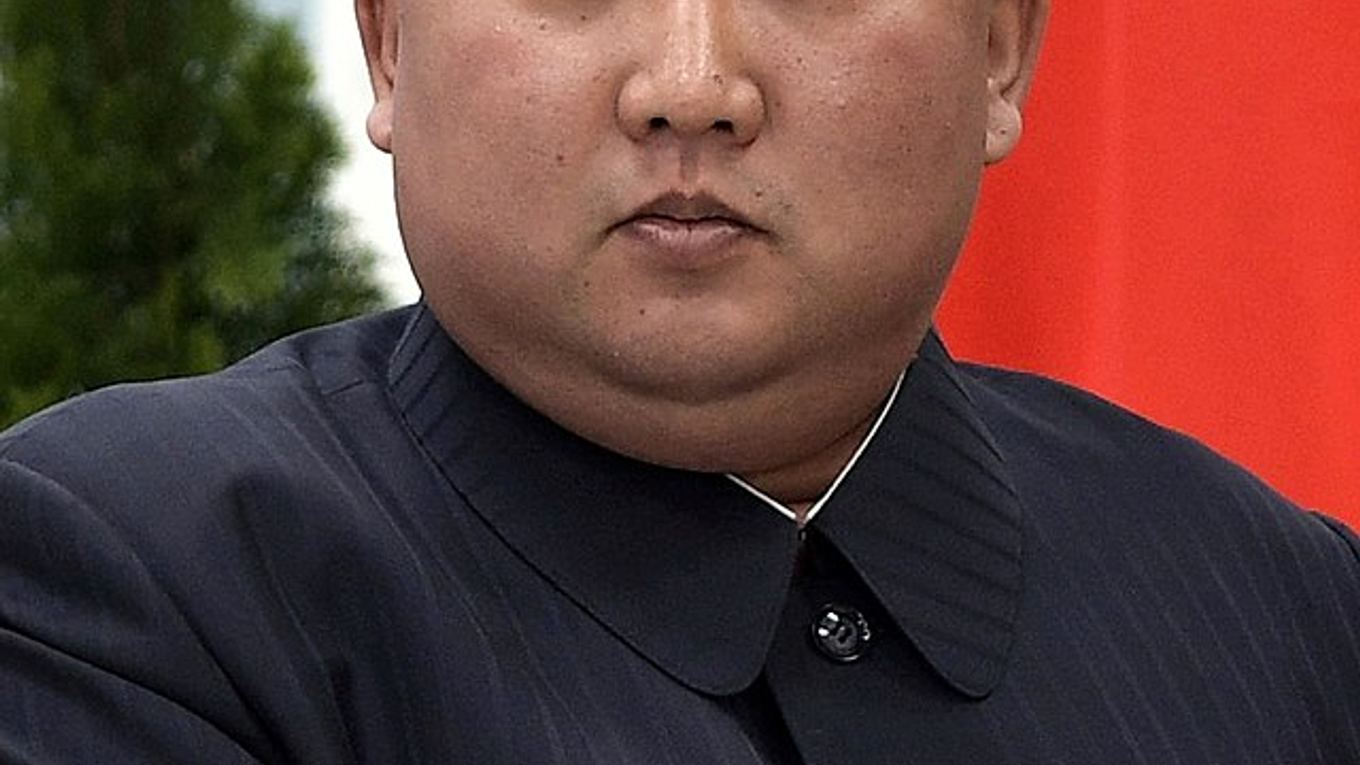
Traders have drawn a clear conclusion. They now see a meeting with Kim as a real possibility and fresh US measures against China this month as close to certain. They give almost nothing to any deal with Beijing on the technology the two countries are fighting over.
A summit built for the cameras
The White House says the trilateral will focus on curbing nuclear proliferation, with the US-Israeli war against Iran also on the table. China's foreign ministry spokeswoman Mao Ning said it would have "groundbreaking significance". US officials do not expect a concrete agreement. They have said export controls are "national security matters" that will not be negotiated, and that Trump will not raise the Nvidia spy affair with Xi.
Ukraine remains in dispute. Officials have said Trump does not plan to raise it, and Moscow wants it discussed. Trump himself called the war his "favorite subject" and said it would come up. Kremlin aide Yuri Ushakov said a separate Trump-Putin meeting in Shenzhen was being arranged.
Kim is now the main variable
Trump met Kim three times in his first term but has had no meaningful engagement since returning to office. Whether that changes in Shenzhen, he said, is "up to President Xi". "He may come. I don't know."
That was enough to move money. As of 17 November, Polymarket traders put the chance of a Trump-Kim meeting by 30 November at 14%, up 13 points in a day, and the chance of one at any point in 2026 at 16%, up 10 points.
The gap between those two numbers is the point. Almost all the probability of a meeting this year sits in the next fortnight. Traders see this trip as Kim's opening or nothing: if no meeting happens in the next two weeks, they give almost no chance of one before January. A meeting with Putin, by contrast, is priced at 99% by the end of the month.
The hawkish track runs in parallel
The chip rule shows how Washington is splitting the relationship in two. The Commerce Department's Bureau of Industry and Security issued an interim final rule on Monday requiring a licence to export advanced chips to Indonesia, Malaysia, Singapore, Thailand and Brazil, which it says carry a "higher-than-normal risk of diversion". Overseas data centres must vet their customers, and those that sell large amounts of computing power to companies based in China, Russia or Iran face restrictions. The licence requirement takes effect in 90 days.
The Justice and Commerce departments late on Monday confirmed a criminal investigation into Megaspeed, the Singapore-based cloud company whose former executive Alice Huang is at the centre of US spying allegations. Beijing calls the claims "entirely groundless". Singapore's government said it was "studying the details" of the new measure.
The divisions are now on the record. Treasury Secretary Scott Bessent, who is travelling with Trump, blamed Commerce Secretary Howard Lutnick on 13 November for failing to put Megaspeed on the entity list. Chris McGuire, a former National Security Council official, said the new rule was written by and at the direction of Treasury and the NSC, which he called "remarkable and unprecedented". Trump has said he is not considering replacing Lutnick.
Traders read the rule as the start of something. They put the chance that the US formally imposes new sanctions of any kind on China by 30 November, a definition that includes expanded export controls, at 85%, up from 9% a day earlier. That number rests on only $42,000 of trading, so it is a strong direction rather than a firm price.
Against that, traders give 4% to Washington and Beijing agreeing this year to pace the development of frontier AI, and 1.3% to Trump endorsing China's claim to Taiwan before the trip ends. The summit is priced as a photograph, not a settlement.
Why the pessimists could be wrong
The case for a bigger outcome is that Trump controls the agenda himself, and has said Ukraine will come up even though his officials say it will not. A three-way nuclear framework, however vague, would be a first. The trade truce expires in January, giving both sides a reason to show progress.
The markets that would register a deal on Ukraine have not moved. Traders put the chance of a Russia-Ukraine ceasefire by 31 December at 6.8%, barely changed in a week. Whatever Trump says to Putin in Shenzhen, traders do not expect it to stop the war this year.
What it means for markets, business and geopolitics
Stocks and sectors The rule extends Washington's reach into the data centres of Southeast Asia, which adds a licensing risk for Nvidia's sales there on top of the scandal. The Nasdaq fell about 2.5% and Nvidia about 4.1% on Monday, and the summit offers no relief on chips.
NVDABusiness Cloud and data-centre operators in Singapore, Malaysia and Thailand face a 90-day window to build customer checks, and Chinese AI developers lose a lawful route to US computing power. Expect regional governments to seek trusted-access arrangements, as Singapore already has.
Politics and policy The China hawks at Treasury and the NSC now set the pace on export controls, while Trump keeps the diplomacy personal. Any warmth in Shenzhen is unlikely to reverse rules already issued.
Geopolitics A Kim appearance would hand Xi the role of broker between Washington and Pyongyang, raising China's leverage over the Korean peninsula at a moment when Seoul has seen joint exercises with the US scaled back.
What to watch
The Trump-Xi bilateral and the three-way meeting on Thursday 19 November are the key moments, along with any statement from Beijing or Pyongyang on Kim's travel before then. After that, watch the end of the month for further US measures, and January for the trade truce.
Trump is going to Shenzhen to talk about cutting nuclear arsenals. His administration has already made its choice on chips.