Trump says the Iran war is "effectively over". The blockade that defines it is not ending any time soon.
Future Times4 min read
In 30 seconds
Tehran called the talk of talks "fake news", and traders cut the chance of Washington lifting its naval blockade this year to about a third. The shooting is winding down; the settlement is not arriving.
- Traders cut the chance of the US ending its Iran blockade this year to 34%, down 6 points in a week
- Invasion fears have faded and the Israel-Iran ceasefire looks secure, so the military risk premium is draining from oil
- Without a Hormuz deal, shipping and energy firms face a blockade that outlasts the fighting into 2027
What it means
- MarketsOil is trading the end of escalation, not the reopening of the Gulf.
- Stocks and sectorsTanker owners and Gulf-exposed shippers stand to keep elevated war-risk rates for as long as the blockade lasts…
- BusinessFirms with Gulf supply chains should plan on a blockade that outlasts the fighting by months.
- GeopoliticsGulf states, in Trump's telling, prefer containment to renewed strikes.
What to watch
Whether the mooted Vance-Rezaei meeting in Qatar happens at all is the first test.
The odds
Polymarket · live, 05:08 GMTUS announces end of Iran blockade by 31 December
down 17 points over 7dfrom 36% a week ago34% when this was published
Now · 19%
Think the market's wrong? Add your forecast and see who's closer.
- US announces end of Iranian blockade by November 307%down 10 points
- US announces end of Iranian blockade by March 3155%down 13 points
- US-Iran Hormuz Agreement by December 3118%down 18 points
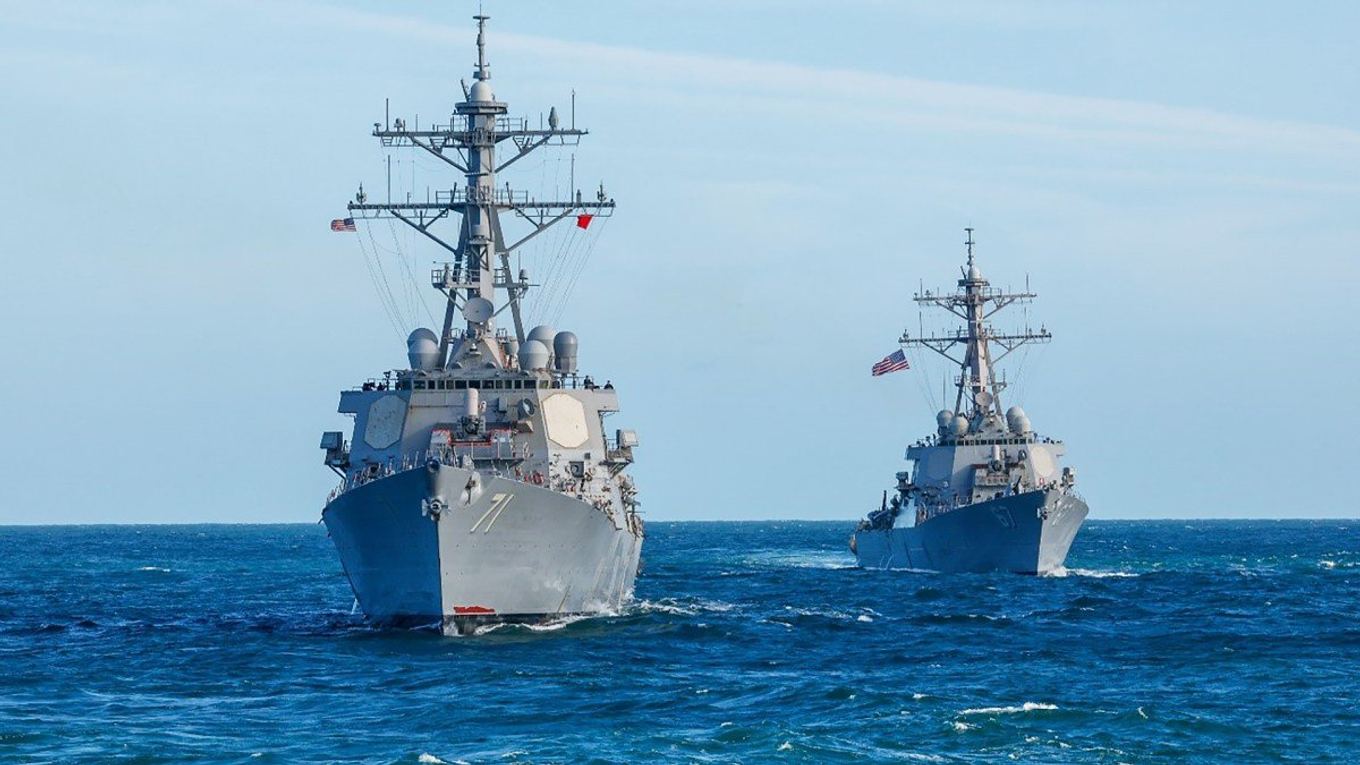
"Stop manufacturing fake news about imaginary talks," Mohsen Rezaei, secretary of Iran's Supreme National Security Council, told Washington late on Monday. Hours earlier Donald Trump had told reporters at the White House that Iran, "militarily, is effectively over", after meeting Qatar's prime minister, who said they discussed ways to advance US-Iran negotiations.
Washington is declaring victory. On Tuesday Pete Hegseth, the defence secretary, said the president "did not kick the can. He kicked their teeth in", and called the US naval blockade of Iran's ports "ironclad". But the outcomes that would mark the end of the war, rather than a pause in it, moved the other way in the seven days to 11 November. Polymarket traders now put the chance that the US announces an end to the blockade by 31 December at 34% (as of 11 November), down 6 points in a week.
A war ending without a deal
The fighting and the settlement are separating. Trump said further strikes were "quite unlikely" and that his policy was "just keeping it the status quo". Iran's foreign minister, Abbas Araghchi, denied that any meeting was planned, and a senior Iranian security official said Tehran would not talk until Washington took concrete steps under its seven conditions. Turkey's intelligence chief, Ibrahim Kalin, had been reported as saying that a planned meeting in Qatar between JD Vance and Rezaei could offer a significant chance of progress.
Trump also wrote that Qatar, Saudi Arabia, the UAE, Bahrain and Kuwait would prefer the current situation to renewed strikes: a status quo that keeps the blockade in place and Iranian land routes for advanced weapons shut. That is a description of containment, not peace. A memorandum of understanding signed in June was meant to end the war that began with US-Israeli strikes in February; Washington and Tehran still dispute what it requires of Iran in the Strait of Hormuz.
The military risk is fading fast
On the battlefield, traders see the war cooling. The chance of a US invasion of Iran before 2027 has fallen to 7.5%, down 9 points in a week. The Israel-Iran ceasefire is priced at 98% to hold through 15 November, up 34 points in a week. A separate market puts the chance of an effective US-Iran ceasefire, a two-week pause in strikes, beginning by 30 November at 67%.
Traders, in other words, still expect the shooting to stop within weeks. The front is not quiet yet. Iranian officials said Qeshm Island in the Strait was struck overnight on Sunday, and an ADNOC vessel was damaged in UAE waters on Tuesday, according to the UAE state news agency.
The settlement markets moved the other way
What changed is the end-state. The chance of an announced end to the blockade by 30 November fell to 13.5%, down 9 points in a week. The chance of a US-Iran agreement on the Strait of Hormuz by 31 December slipped to 33%. Traders give 16.5% to a senior US-Iran diplomatic meeting before the end of November, down 8 points in a week, which suggests they put more weight on Tehran's denials than on the Qatari channel.
Read together, the prices imply a sequence: a ceasefire in November first. A Hormuz agreement and an end to the blockade are each roughly one-in-three this year; prices so close together are consistent with traders treating them as one package. Only by 31 March does the blockade's end become more likely than not, at 66%. The market's timeline for the political settlement now runs into the spring.
The case against this reading is real. Qatar is actively mediating, and Trump says Tehran is "talking very politely" with Washington. A confirmed Vance-Rezaei meeting would likely move these numbers sharply. Fereidun Fesharaki of the consultancy FGE disagrees: he said the gap between the two sides is "so wide, it cannot be bridged".
Oil has priced the ceasefire, not the peace
Brent briefly dipped below $90 a barrel on Tuesday for the first time since August, before settling at $91.49. By early Wednesday it was back near $92.50, with WTI near $86.60, as tanker attacks continued. As many as 37 vessels were attacked in Hormuz in October, according to the Washington Institute. LSEG analysts said that even with a deal, more traffic through the waterway "would still depend on mine clearance".
Traders still give 57% to WTI dipping to $80 at some point in November, down 6 points in a day. The risk premium from a wider war is draining away; the discount that peace would bring has not arrived.
A US indictment announced on Tuesday hardens the politics further. Prosecutors charged three alleged Iranian operatives over a September plot against RAF Fairford, a base in England used by US bombers in the war; the indictment alleges one defendant directed others to drive vans, some carrying fuel barrels, to the base. Iran has denied involvement in the incident.
What it means for markets, business and politics
Markets Oil is trading the end of escalation, not the reopening of the Gulf. Further falls toward $80 for WTI look more likely than a return to the roughly $60 Brent of early 2026 while the blockade stands and tankers are still being hit.
Stocks and sectors Tanker owners and Gulf-exposed shippers stand to keep elevated war-risk rates for as long as the blockade lasts; airlines and refiners gain from a lower risk premium but not from restored Iranian supply.
Business Firms with Gulf supply chains should plan on a blockade that outlasts the fighting by months. A ceasefire alone will not reopen Iranian ports.
Geopolitics Gulf states, in Trump's telling, prefer containment to renewed strikes. That leaves Qatar's channel as the main route to a settlement, and Tehran's seven conditions as its price.
What to watch
Whether the mooted Vance-Rezaei meeting in Qatar happens at all is the first test. Then watch whether the Israel-Iran ceasefire holds past 15 November, and whether the year-end blockade figure falls below 30%, a sign traders have written off a settlement in 2026.
The war may be over in the way Trump means it. The blockade is how it is still being fought.