Trump calls Putin his "friend" before a first three-way summit with Xi. Ukraine was not invited
Future Times4 min read
In 30 seconds
The Kremlin says Trump and Putin discussed Ukraine in Shenzhen but that "neither side made any particularly important statements". Traders see little chance of a ceasefire this year and now expect any deal to wait until mid-2027.
- Russia brought its finance minister and its investment envoy to the Trump meeting, a sign that Moscow is talking money as much as war
- Hopes of an energy truce before winter have more than halved in a week
- Brussels wants €45bn more for Kyiv in 2027, repayable only if Russia ever pays reparations
What it means
- MarketsEurope is borrowing for the war it expects.
- BusinessWith an energy truce now unlikely before spring, Ukraine's power grid and Russia's refineries remain targets through…
- GeopoliticsThe format matters more than anything said.
- PoliticsFriedrich Merz has threatened to veto the next EU budget unless all 27 members back the loan, tying Ukraine's funding…
What to watch
First, whether Shenzhen produces any joint text or only separate readouts.
The odds
Polymarket · live, 11:44 GMTRussia and Ukraine reach a ceasefire by 31 December
up 1 point over 7dfrom 4% a week ago7% when this was published
What would move these odds
- A Shenzhen statement that names a Ukraine ceasefire or a date for talks would lift the odds
- A debrief in Berlin that gives Kyiv a seat at the next round would help a deal by mid-2027
- More strikes on bridges, refineries or power plants would push a truce further out
Now · 5%
Think the market's wrong? Add your forecast and see who's closer.
- Russia x Ukraine Ceasefire by March 31, 202719%down 1 point
- Russia x Ukraine ceasefire agreement by March 31, 202726%down 4 points
- Russia x Ukraine ceasefire agreement by June 30, 202757%up 2 points
"Who is that?" Donald Trump asked as he walked towards Vladimir Putin in a small conference room in Shenzhen on Thursday, before laughing: "He's my friend." In their first meeting since Anchorage in August 2025, Trump told the Russian president: "We've had a great relationship for many years." He added: "I think a lot of wonderful things can come out of this, or at least start."
The Kremlin's account was cooler. The talks lasted 35 to 40 minutes, and Ukraine was the main subject, said Yury Ushakov, Putin's foreign-policy aide. "Neither side made any particularly important statements," he added. Trump then met Xi Jinping. The first three-way meeting of the American, Chinese and Russian leaders was scheduled for 2.30pm local time at the Qilin state residence, on the sidelines of the APEC summit. No Ukrainian was invited.
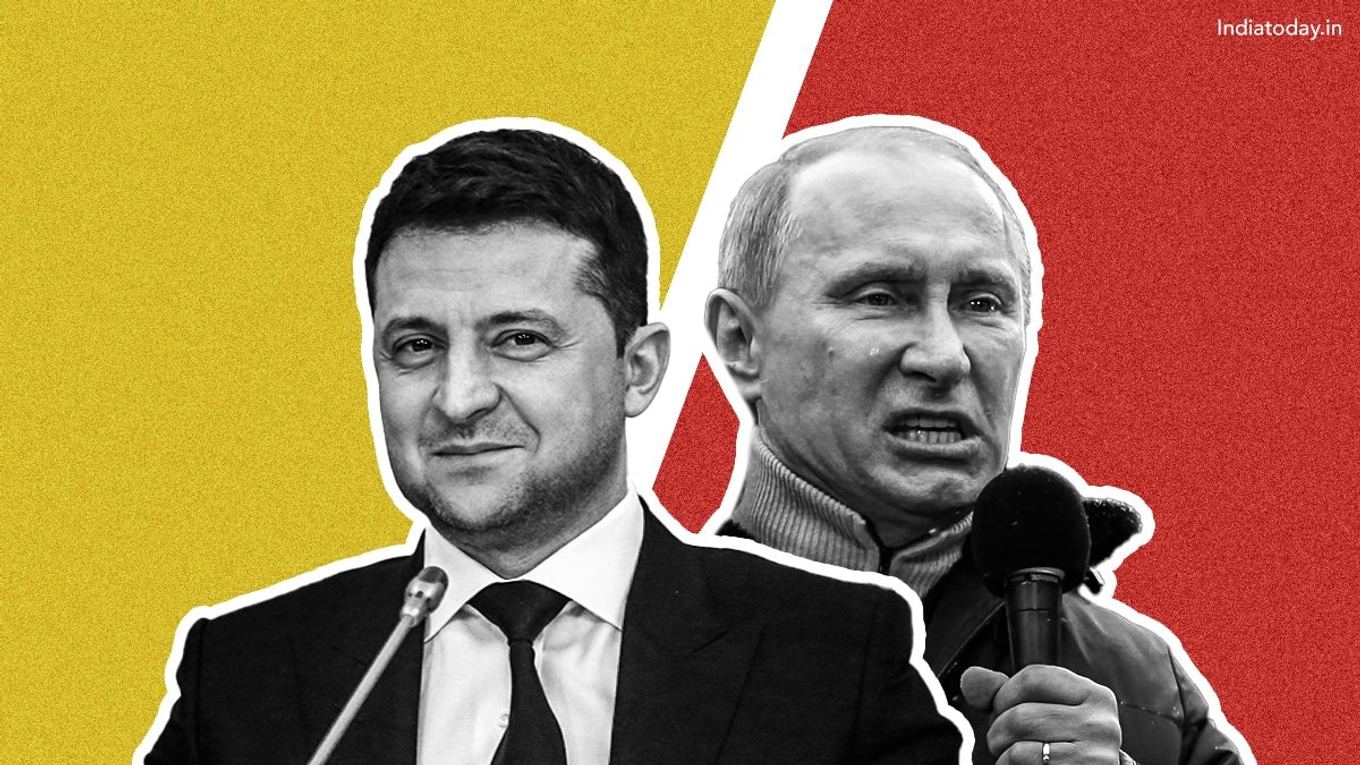
Traders put the chance of a Russia-Ukraine ceasefire by 31 December at 7.4% (as of 19 November), and see a deal as more likely than not only by the middle of 2027. A truce needs the two leaders who are still not talking to each other.
Three leaders, three different agendas
Beijing has promised nothing. "The three heads of state will have an in-depth exchange of views on important issues bearing on global peace," Guo Jiakun, a foreign ministry spokesman, said on Wednesday. The Kremlin said Moscow had no extraordinary expectations.
Trump arrived with a longer list. The White House had said Ukraine would not be discussed without Ukrainians present; Trump has since said it will be. "I'd like to see it ended, I think I can speak for both of us, very much," he said at his meeting with Xi. He and Xi also discussed Iran and the Strait of Hormuz. Washington also wants a three-way nuclear arms deal to replace New START, which lapsed in February; Moscow and Beijing have shown little interest.
The seating says something too. Marco Rubio and Scott Bessent joined Trump; Putin brought Sergey Lavrov, Ushakov, Anton Siluanov, his finance minister, and Kirill Dmitriev, his investment envoy. Dmitriev said afterwards that "both of them are committed to a peaceful resolution of the Ukrainian conflict". A finance minister at the table suggests Moscow is there to talk about sanctions and money as much as the front line.
Traders have pushed the deal into 2027
Traders give 21.5% to a ceasefire by 31 March 2027, down 2 points in a week. They give 28% to a ceasefire agreement by the same date, down 7.5 points, most of that in the past day. Extend the deadline to 30 June 2027 and the figure jumps to 59.5%, up 7 points. So the middle of the market's expectations now falls between April and June 2027.
The narrower deal has fared worse. A limited agreement to stop hitting energy infrastructure by 31 December is priced at 13.5%, down from 29.5% a week ago. The slide came as Ukraine struck the Kerch Strait bridge twice in two nights, bringing down part of the road crossing, and hit two oil refineries in southern Russia. Neither side is behaving as if a winter truce is close.
The bottleneck is still the two men who would have to sign. Traders give only 6% to Volodymyr Zelenskyy speaking to Putin by year end. They put the chance that the two do not meet at all before the end of 2027 at 76%, up 9.5 points in a week. "Matters concerning Ukraine must be decided with Ukraine's participation," Zelenskyy said in his nightly address.
Why Shenzhen could still matter
The strongest case against the market rests on China. As Russia's largest trading partner, Beijing could change the Kremlin's sums more than any sanctions bill if Xi chose to press Putin. And Steve Witkoff and Jared Kushner fly straight to Berlin, where Germany, France and Britain host more than 30 European leaders and Zelenskyy, to brief Kyiv. If a date for talks or an energy-truce framework came out of Shenzhen and survived Berlin, traders would be too gloomy.
So far the record points the other way. Xi is reported to regard the war as a European problem rather than China's. And Europe is planning for the fighting to go on into 2027. On Wednesday the European Commission proposed a €45bn loan to cover about two-thirds of Ukraine's roughly €70bn budget gap next year. Kyiv would repay only if Russia agrees to pay reparations in a future peace deal. Slovakia, the Czech Republic, Hungary and Bulgaria have said they will not take part, and the loan needs all 27 governments.
What it means for markets, business and diplomacy
Markets Europe is borrowing for the war it expects. With last December's €90bn, the new loan would take joint EU borrowing for Ukraine to €135bn for 2026 and 2027, adding €2bn-2.5bn a year in interest for member states and more EU bonds for investors to absorb.
Business With an energy truce now unlikely before spring, Ukraine's power grid and Russia's refineries remain targets through the winter. Insurers, shippers and energy traders exposed to the Black Sea region face another winter priced for disruption.
Geopolitics The format matters more than anything said. A table with Washington, Beijing and Moscow but without Kyiv or Brussels seats Russia among the great powers, and makes Berlin the place where Europe tries to win back a say.
Politics Friedrich Merz has threatened to veto the next EU budget unless all 27 members back the loan, tying Ukraine's funding to the bloc's wider budget battle.
What to watch
First, whether Shenzhen produces any joint text or only separate readouts. Second, whether Kyiv leaves Berlin with a date for talks. Then EU leaders must agree the €45bn loan unanimously. A ceasefire agreement priced above 35% for the end of March would show that traders think something real happened in Shenzhen.
Shenzhen gives Trump, Xi and Putin their photograph. A ceasefire still depends on Kyiv and Moscow, and neither was talking to the other in Shenzhen.