Van Hollen is trailing Schumer badly. His Iran war demand could still shut the government on 12 December
Future Times4 min read
In 30 seconds
Senate Democrats pick their leader on 1 December, ten days before federal funding runs out. Colleagues are rejecting Van Hollen's call to cut off war money in the stopgap, yet traders still put the risk of a shutdown at about one in three.
- Schumer's odds of leading the new Senate rose 9 points in a week as Van Hollen's public support stalled at four colleagues
- Almost all the shutdown risk sits on the 11 December deadline: 35% by 12 December against 36% by year end
- At least six Senate Democrats have demanded limits on Iran war spending in any stopgap, and Thune calls the idea "short-sighted
What it means
- MarketsA lapse from 12 December would interrupt federal data releases in the last weeks of the year, leaving investors and the…
- BusinessFederal contractors, and airlines facing the holiday peak, carry the most direct exposure; a Republican aide warned…
- PoliticsA Schumer win on 1 December settles the leadership but not the strategy; the votes on 11 December will show whether the…
- GeopoliticsEven without a shutdown, the fight signals to Tehran and US allies that Congress will contest the war's funding once…
What to watch
- 1 DecThe Senate Democratic leadership ballot on 1 December is the first test: a Schumer margin well…
The odds
Polymarket · live, 12:10 GMTFederal government shuts down by 12 December
up 3 points over 7dfrom 21% a week ago35% when this was published
What would move these odds
- A stopgap paired with a Pentagon plan to wind down combat in Iran, which Coons has floated, would cut the odds
- Kaine and other uncommitted Democrats joining the no-war-funding bloc would push them up
- An upset Van Hollen win on 1 December would raise them sharply
Now · 24%
Think the market's wrong? Add your forecast and see who's closer.
- Government shutdown by December 3133%up 1 point
- Next Senate Majority Leader: Chuck Schumer94%unchanged
- Next Senate Majority Leader: Chris Van Hollen7%unchanged
"Nobody I've talked to thinks a shutdown makes any sense," Senator Jeanne Shaheen of New Hampshire said in remarks The Hill published on 19 November. She was answering Chris Van Hollen, the Maryland Democrat challenging Chuck Schumer to lead the party's new Senate majority, who wants any bill keeping the government open to bar money for the war in Iran.
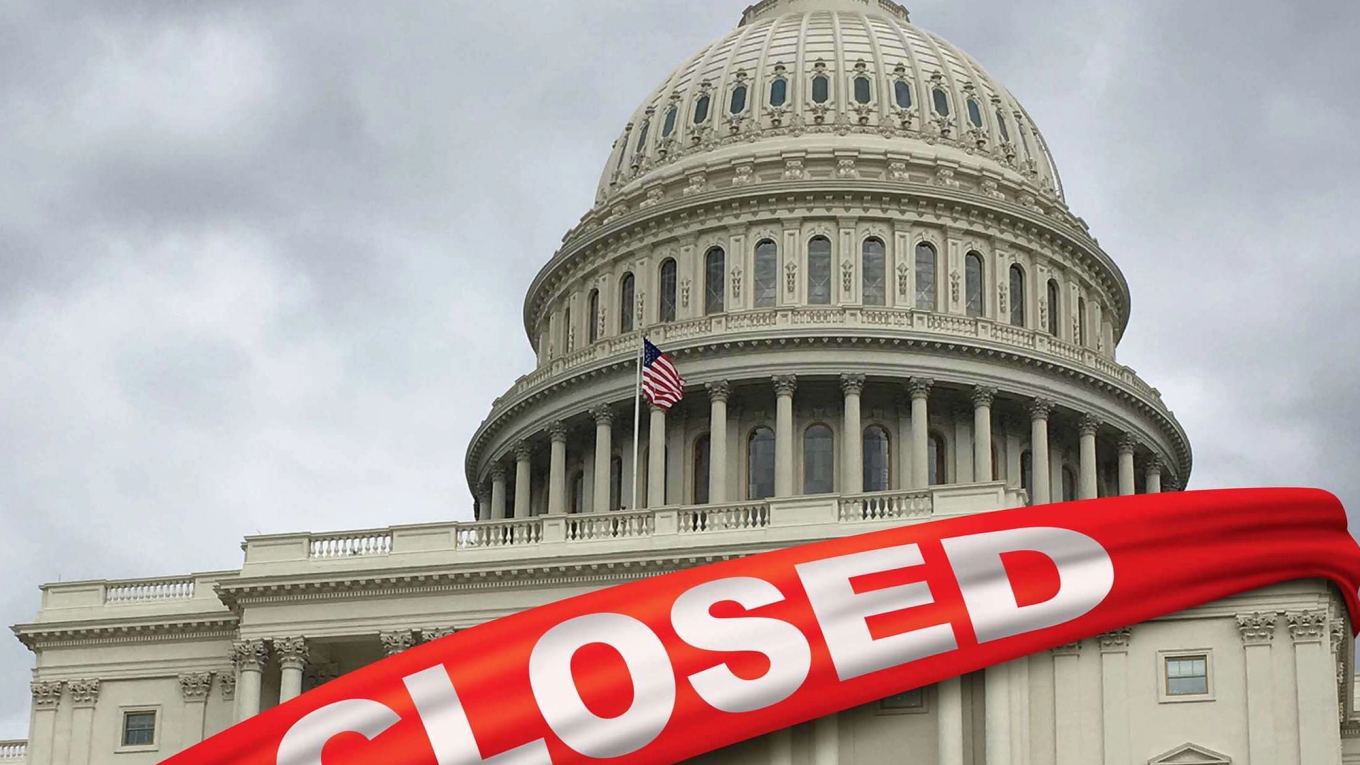
The two fights now run on the same clock. Senate Democrats choose their leader by secret ballot on 1 December. Ten days later, at the end of 11 December, the stopgap that funds federal agencies expires. Van Hollen looks likely to lose the first contest. His demand may yet decide the second.
A leadership race Schumer is pulling away in
Schumer has the numbers in public. Counts compiled from senators' statements put his public endorsements at 15 colleagues; Van Hollen has four: Bernie Sanders, Jeff Merkley and senators-elect Abdul El-Sayed of Michigan and Peggy Flanagan of Minnesota. Six more, including Elissa Slotkin and Chris Pappas, have called for new leadership without backing the challenger. Around 19 are publicly uncommitted. The winner needs 29 votes in a caucus of 56.
Van Hollen says the lists understate him. "A number of those people on that list have actually committed to voting for me," he said on CNN on 15 November, without naming anyone. The ballot is secret, so a pledge in public need not survive the booth.
Traders are not persuaded. As of 19 November they gave Schumer a 94.5% chance of becoming the next Senate majority leader, up 9 points in a week, and Van Hollen 4.9%, down from 11.3% seven days earlier.
The House settled its own question on 18 November, when Democrats nominated Hakeem Jeffries for Speaker by 251 votes to 11. Traders give him a 98.9% chance of taking the gavel in January.
The deadline that outlives the contest
The stopgap, signed by President Trump on 2 September, funds agencies until 11 December, the White House said. Democrats take both chambers only in January, so the bill that matters will pass, or fail, in the old Congress, where it needs Democratic votes to clear the Senate's 60-vote threshold.
Earlier in November Van Hollen, Michael Bennet, Bernie Sanders and Tammy Duckworth demanded that any stopgap include language "that restricts the Trump Administration from using appropriated funds to continue his war against Iran." Van Hollen has gone further. "We should not be voting for one penny in mid-December to continue this war," he told NPR. He has also turned it on his rival, saying that "under our current leadership" Democrats are "not willing to use the most important power" Congress has to end a war, "which is to defund it."
Schumer has said the war "must end" and that Democrats will use "the power of the purse", but has not said a funding bill must carry a ban, or whether he would risk a shutdown. Most of the caucus sits with him. John Hickenlooper called a shutdown before the holidays "a tough nut"; Raphael Warnock said "we should do everything we can to fund the government." Republicans are unmoved. "I don't know why you'd force another government shutdown," said John Thune, the majority leader.
What traders see in a one-in-three risk
Traders put the chance of a shutdown by 12 December at 35% as of 19 November. That is up 4.5 points in a day but almost unchanged over the week. The chance of one by 31 December is 36%, down 6.5 points in a week.
The two figures tell the story together. Almost all the risk sits on the night of 11 December itself: traders see little chance that Congress passes a short extension and then stumbles later in the month. And the drift lower in the year-end figure has tracked Schumer's climb. That is consistent with traders reading a stronger Schumer as a less confrontational funding fight, though it does not prove the link.
Why the hard-liners could still force it
The case for a higher risk is real. Van Hollen does not need to win on 1 December to shape 11 December. The four signatories have been joined in public by Richard Blumenthal ("I will not approve funding for the Iran war") and Tim Kaine, who calls the spending lever "the only option we have" after Trump ignored war powers resolutions. A defeated challenger with a loyal bloc could still deny Republicans the votes they need.
Against that, last year's memory weighs heavily. A shutdown over health subsidies lasted more than 40 days before some Democrats voted with Republicans. Chris Coons is looking instead for a Pentagon plan to wind down combat, and Susan Collins, a Republican critic of the war, says a stopgap is the wrong place to fight it. A deal on that model, a clean extension plus assurances on the war, is the likeliest way out.
What it means for markets, business and politics
Markets A lapse from 12 December would interrupt federal data releases in the last weeks of the year, leaving investors and the Fed with less official evidence on jobs and inflation.
Business Federal contractors, and airlines facing the holiday peak, carry the most direct exposure; a Republican aide warned that a shutdown could run into 2027 and disrupt air travel.
Politics A Schumer win on 1 December settles the leadership but not the strategy; the votes on 11 December will show whether the party's anti-war wing can bind its leader before he takes the majority.
Geopolitics Even without a shutdown, the fight signals to Tehran and US allies that Congress will contest the war's funding once Democrats take both chambers in January.
What to watch
The Senate Democratic leadership ballot on 1 December is the first test: a Schumer margin well beyond 29 votes would weaken the hard-liners' hand. Then watch whether Kaine and Duckworth's draft language barring war spending wins Democratic leaders' support. A 12 December figure back above 40% would signal that the bloc is holding.
Schumer looks set to win his job back. Whether he keeps the government open depends on the colleagues who voted against him.