Xi hugged Trump on the tarmac in Shenzhen. The deals that would matter are still nowhere in sight
Future Times4 min read
In 30 seconds
Thursday's three-way meeting with Putin will make history as a picture. Traders see almost no chance of a Taiwan shift or an AI pact, and Washington and its European allies have split over how Ukraine should fight.
- A Ukraine ceasefire this year is seen as a one-in-14 shot; traders put the central date for a deal in spring 2027
- Washington is tightening chip curbs on China during the visit, not relaxing them
- Europe is preparing to fund Kyiv through 2027, a sign it expects the war to outlast the summit
What it means
- Stocks and sectorsTighter chip-licensing rules during a goodwill summit show that export controls are running on their own track.
- MarketsWith a ceasefire seen as unlikely before spring, the risk premium tied to the war, in European gas, diesel and defence…
- Politics and policyThe €45bn plan makes EU borrowing, not Washington, the backstop for Kyiv's 2027 budget.
- GeopoliticsA meeting that produces pictures but no settlement leaves Beijing the main winner.
What to watch
- 19 NovThe trilateral on Thursday 19 November and the Trump-Xi bilateral, and whether any joint text…
The odds
Polymarket · live, 12:17 GMTRussia and Ukraine agree a ceasefire by 31 December
up 1 point over 7dfrom 4% a week ago7% when this was published
What would move these odds
- A joint statement on Thursday naming a Ukraine ceasefire timetable would lift the year-end odds sharply
- A Trump-Putin one-to-one in Shenzhen with a Ukraine readout would push them up
- Fresh Russian strikes on Ukrainian energy, or a Kremlin rejection of talks, would push them lower
Now · 5%
Think the market's wrong? Add your forecast and see who's closer.
- Russia x Ukraine ceasefire agreement by March 31, 202726%down 4 points
- Russia x Ukraine ceasefire agreement by May 31, 202755%unchanged
- Russia x Ukraine energy ceasefire agreement by December 3110%up 1 point
Xi Jinping walked out onto the tarmac in Shenzhen on Wednesday to meet Donald Trump's plane, the first time he has personally greeted a visiting leader at the airport since becoming president. The two men briefly hugged before heading to their motorcades. China "has a tradition of reciprocating courtesy", Xi said, returning the welcome Trump gave him at Joint Base Andrews in September. Trump said every meeting with Xi had been "very pleasant".
At the same Apec summit, Vladimir Putin told business leaders that Europe's living standards were falling "steadily" and, "humiliatingly, for the eurozone". On Thursday 19 November the three men sit down together for a three-way meeting of the American, Chinese and Russian leaders.
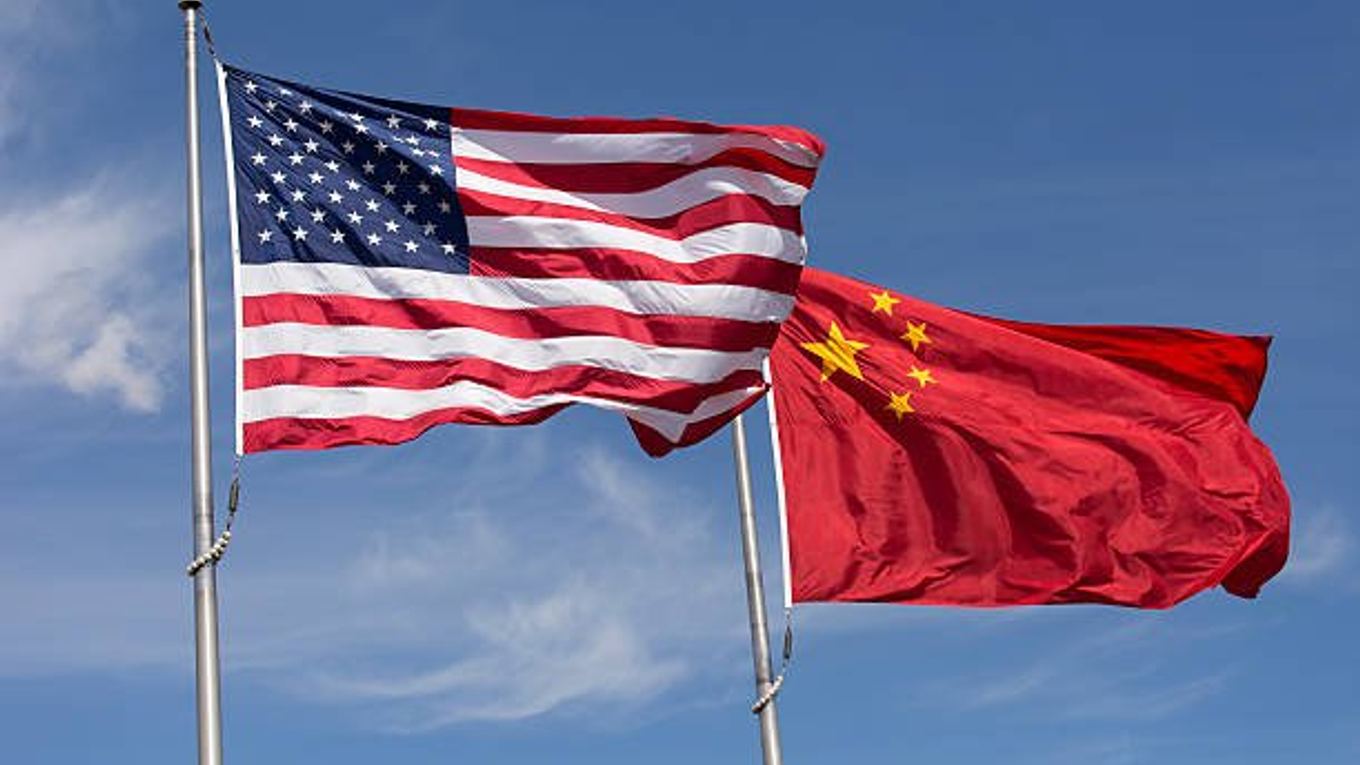
The pictures will be historic; the expected results are not. As of 18 November, traders give a Russia-Ukraine ceasefire by 31 December a 6.9% chance, and see almost no prospect of Trump shifting on Taiwan or of Washington and Beijing agreeing to slow the race to frontier AI. The gap between the photo opportunity and the outcomes priced behind it is the story of this summit.
A welcome on the runway, a crackdown on the chips
The choreography in Shenzhen has been warm. Xi told Trump he wanted to "advance a constructive, strategic and stable relationship", according to Xinhua. Trump is also due to hold bilateral talks with Xi. Beijing has said only that the three leaders will hold "in-depth exchanges on safeguarding world peace and promoting strategic stability in major-power relations".
The policy underneath is cooler. On Monday the Commerce Department's Bureau of Industry and Security required export licences for advanced chips shipped to Indonesia, Malaysia, Singapore, Thailand and Brazil, to stop Chinese AI developers reaching them through data centres abroad. It comes amid scrutiny of Nvidia's chip exports after the scandal that ended Jensen Huang's tenure as chief executive. China has pledged to retaliate against the new limits.
Traders read that as the direction of travel, giving 91% to the US imposing new sanctions on China by 30 November, up from 7% a week ago.
They put a US-China agreement to pace the AI frontier this year at 3.6%, and Trump endorsing China's claim to Taiwan by the end of the trip at 1.7%. Taiwan is not on any published agenda; the live economic question, extending the trade truce beyond January, belongs to the bilateral.
Ukraine is on the table, but no closer to settled
The White House first signalled that Ukraine would not be discussed in Shenzhen; Trump has since said it will be. Kremlin spokesman Dmitry Peskov said on Wednesday that Putin and Xi had discussed the conflict in Ukraine. Putin said he expected "big potential benefit" from Thursday and that disputes could be settled "sitting at the table".
Traders are not persuaded. The chance of a ceasefire by 31 December has slipped from 9.5% to 6.9% in a week.
The odds of a signed ceasefire agreement by 31 March 2027 fell 5 points on Wednesday to 30.5%; by 31 May 2027 they stand at 54.5%. That puts the central expectation for a deal in late spring, not this winter. A narrower energy ceasefire by year end, the kind of partial deal that could come out of a summit, has dropped from 30.5% to 13.5% in a week.
The rift Moscow will notice
The summit opens with Washington and Europe arguing in public about how Ukraine should fight. Elbridge Colby, the Pentagon's policy chief, told allies at Nato headquarters on Tuesday that Ukraine's deep strikes into Russia "have not been effective in driving an end to the war", and that hits on civilian infrastructure "have actually probably hardened the Russian public's resolve". Germany's defence minister, Boris Pistorius, called the criticism "quite a stupid thing, I think". Britain's defence secretary, Wes Streeting, said it was "not for us to tell Ukraine how to fight their war".
Brussels, meanwhile, is planning for a war that runs through 2027. On Wednesday Ursula von der Leyen proposed up to €45bn in new loans for Ukraine next year, €25bn for military needs and €20bn in budget support. The money would be borrowed on capital markets and guaranteed by the EU budget. "Ukraine only needs to repay once Russia pays for the damage it has caused in Ukraine," she said. The proposal sits on top of the €90bn loan already agreed and still needs approval from the European Parliament and member states.
Why the market could be wrong
The case for a surprise is real. Trump's diplomacy runs on personal meetings, Putin is talking up the summit, and China, Russia's largest trading partner, has leverage no Western capital has. A three-way commitment to talks on a timetable would move the year-end odds fast. But a declaration is not a signed ceasefire, and nothing on the published agendas points to one.
What it means for markets, business and geopolitics
Stocks and sectors Tighter chip-licensing rules during a goodwill summit show that export controls are running on their own track. Nvidia and South-East Asian data-centre operators carry the compliance risk whatever the handshakes look like.
NVDAMarkets With a ceasefire seen as unlikely before spring, the risk premium tied to the war, in European gas, diesel and defence, has little reason to unwind on Thursday's news alone.
Politics and policy The €45bn plan makes EU borrowing, not Washington, the backstop for Kyiv's 2027 budget. That raises the stakes of the Colby dispute for the capitals paying the bills.
Geopolitics A meeting that produces pictures but no settlement leaves Beijing the main winner. Xi gets to host both men, frames China as the defender of open trade, and concedes nothing on Taiwan or chips.
What to watch
The trilateral on Thursday 19 November and the Trump-Xi bilateral, and whether any joint text mentions Ukraine or a ceasefire timetable. China's response to the chip rule, and any extension of the trade truce beyond January. How member states and the European Parliament receive the €45bn plan.
Shenzhen will produce the photograph of the year. The prices say it will not produce much else.