The IAEA doesn't know where Iran's newest enrichment plant is. Israel's spy chief is in Washington pressing for war
Future Times5 min read
In 30 seconds
Inspectors have been locked out for more than a year and Iranian hardliners now talk openly of leaving the NPT. Trump is still resisting Netanyahu's push to restart strikes, and traders have grown more confident the truce survives the year.
- Traders give inspectors an 8% chance of reaching Isfahan, Fordow or Natanz this year, half last week's level
- A formal Iranian exit from the NPT is a minority risk at 9.4%, but it has edged up all week
- Saudi Arabia and Qatar back Trump's blockade-not-bombs line, the main brake on a new Israeli campaign
What it means
- MarketsWith war risk easing but no deal in sight, oil keeps a blockade premium rather than a war premium; a renewed Israeli…
- Stocks and sectorsAirlines with Gulf and Asia routes face the airspace risk; a one-in-four chance of a full Iranian closure keeps…
- GeopoliticsThe nuclear file now has no verifier.
- PoliticsIsrael's coalition talks and the Iran question are now linked; a quick Eisenkot government lowers the near-term strike…
What to watch
The first test is Witkoff's meeting with Gofman in Miami and what, if anything, Washington says afterwards.
The odds
Polymarket · live, 07:18 GMTIsrael-Iran ceasefire holds through 31 December
up 11 points over 7dfrom 58% a week ago67% when this was published
What would move these odds
- Trump endorsing renewed Israeli strikes after the Gofman-Ratcliffe talks would cut the odds sharply
- Eisenkot forming a government would ease fears of a last-minute strike by Netanyahu
- Iran filing an Article X notice to quit the NPT would raise the case for strikes and lower the odds
Now · 69%
Think the market's wrong? Add your forecast and see who's closer.
- Israel x Iran ceasefire continues through: November 3086%up 15 points
- Israel x Iran ceasefire continues through: December 1572%up 10 points
- IAEA visits Isfahan, Fordow, or Natanz nuclear site by December 318%down 8 points
"The Agency does not know IFEP's exact location, status for safeguards purposes or whether it contains nuclear material." That sentence, in the International Atomic Energy Agency's quarterly report on Iran circulated to member states on Friday 13 November, refers to the Isfahan Fuel Enrichment Plant, an underground facility Iran declared in 2025 and has never let inspectors see. The agency says it is "increasingly concerned".
On the same day, Axios reported that Roman Gofman, the director of Mossad and one of Benjamin Netanyahu's closest confidants, was in Washington meeting CIA Director John Ratcliffe, as the Israeli prime minister presses Donald Trump to resume the war on Iran. Gofman is expected to go on to Miami to see the White House envoy Steve Witkoff.
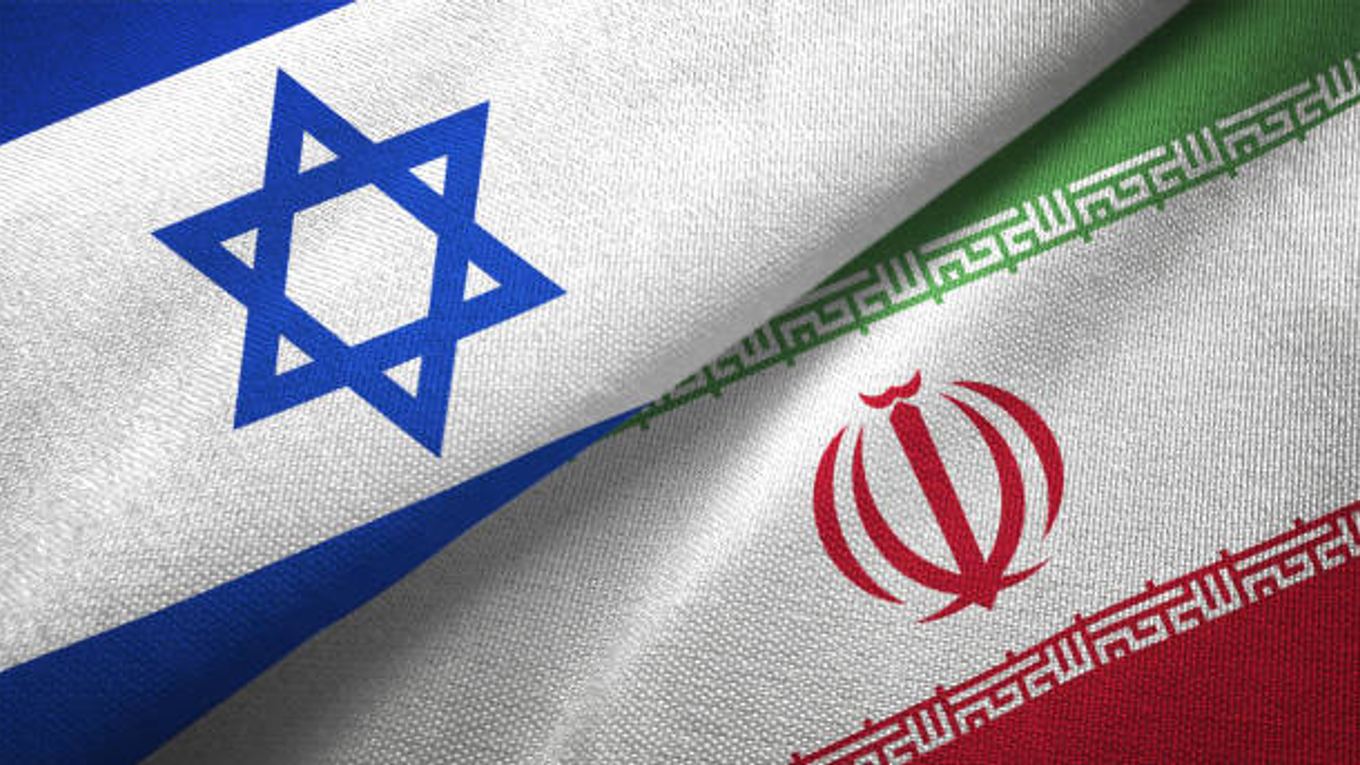
The two stories are linked. The less the world can verify about Iran's nuclear programme, the stronger Israel's case for force becomes. Yet traders are betting that Trump keeps saying no: the chance that the Israel-Iran ceasefire survives to 31 December has climbed to 66.5% (as of 13 November) from 46.5% a week ago.
A programme that has gone dark
Inspectors have been barred from Iran's enrichment sites since the strikes of June 2025. The agency asked again in February for access to the Isfahan plant "as soon as possible"; Iran refused, citing "conditions resulting from acts of aggression and the continuation of threats". "It is more than a year since the agency lost continuity of knowledge," Rafael Grossi, the director general, wrote. The agency says it cannot conclude that no declared nuclear material has been diverted, including more than 400kg of near-weapons-grade uranium it estimates Iran produced before the strikes.
Tehran is not offering a way back in. Its national security chief, Mohsen Rezaei, has said Iran will not let "a single particle" of enriched material leave the country, and Trump wrote on 12 November: "We don't need a deal with Iran. Those days have long since passed."
Traders have drawn the obvious conclusion. They give 8% to any IAEA official physically visiting Isfahan, Fordow or Natanz by 31 December, down from 15.5% seven days earlier. A final US-Iran nuclear deal by the same date is priced at 7.5%.
The NPT debate goes mainstream in Tehran
The pressure inside Iran runs the other way. On Thursday the Assembly of Experts, the clerical body that appoints the Supreme Leader, said examining withdrawal from the Non-Proliferation Treaty and reviewing defence doctrine "has become an unavoidable necessity". Kamran Ghazanfari, a member of parliament, told Euronews that "we must review the nuclear doctrine of the Islamic Republic", adding: "I infer that this change of doctrine has in practice already happened."
The formal route is still blocked. A former MP, Heshmatollah Falahatpisheh, told Euronews that the Supreme National Security Council "has not agreed to the MPs' triple-urgency bill to withdraw from the NPT", and the Foreign Ministry says Iran remains committed to the treaty. Traders put the chance that Iran formally notifies the UN of withdrawal under Article X before 2027 at 9.4%, up from 6.6% a week ago: a minority risk, but one that is rising.
Why Netanyahu is running out of time
Netanyahu lost his parliamentary majority in the 27 October election, and Gadi Eisenkot holds the mandate to form a government. Israeli opposition leaders fear Netanyahu may attack Iran, or provoke it, to derail that effort, according to Axios. The two men met for two hours on Thursday, and a source close to Eisenkot said the situation does not require immediate military action.
Trump has so far refused. He has sided with Saudi Arabia, Qatar and the UAE in favour of the naval blockade and economic pressure. "I could end it immediately," he said on Thursday, but "we are doing it a little bit longer way, a little bit more civilly". He added: "Saudi Arabia has asked me to please just let it be the way it is now for a while."
That restraint is what traders are pricing. The ceasefire is given 80.5% to last through 30 November and 72.5% through 15 December, all sharply higher on the week. Even so, the decline across those dates implies roughly one chance in three that the truce breaks before the year is out: about one in five by the end of November, and the rest in December.
Skirmishing continues around the edges: on Friday the Revolutionary Guards claimed to have destroyed a US radar in Bahrain, which US Central Command denied. Traders give 25% to Iran closing its entire airspace by 31 December, below the risk of a broken truce, which suggests they expect any renewed exchange to be limited rather than a return to the opening weeks of the war.
Why the hawks could still get their way
Every week without inspectors strengthens the argument that Iran is rebuilding in secret, and an Article X notice would hand Israel a case Washington would find hard to dismiss. Netanyahu also controls the timing until a new government is sworn in. If Gofman's intelligence persuades Ratcliffe, the 20-point gain in the year-end ceasefire price could reverse within days.
What it means for markets, business and geopolitics
Markets With war risk easing but no deal in sight, oil keeps a blockade premium rather than a war premium; a renewed Israeli campaign would add the second on top of the first.
Stocks and sectors Airlines with Gulf and Asia routes face the airspace risk; a one-in-four chance of a full Iranian closure keeps rerouting costs in planning for December.
Geopolitics The nuclear file now has no verifier. Without inspectors, any future deal or strike will rest on intelligence claims rather than IAEA findings, which raises the cost of being wrong in either direction.
Politics Israel's coalition talks and the Iran question are now linked; a quick Eisenkot government lowers the near-term strike risk, while a drawn-out stalemate leaves Netanyahu in charge of the decision.
What to watch
The first test is Witkoff's meeting with Gofman in Miami and what, if anything, Washington says afterwards. Then come Eisenkot's coalition talks, and whether Iran's Supreme National Security Council lets the NPT bill reach an open vote in parliament. A year-end ceasefire price back below 50% would signal Washington has relented.
Inspectors cannot see inside Iran's programme. For now, Trump is choosing not to find out by force.