SpaceX caught a Starship coming home from orbit for the first time. Now it has to fly one again
Future Times4 min read
In 30 seconds
The ship dropped into the tower's arms after 22 hours and 14 orbits, a day after its booster blew up over the Gulf. Traders now take full reuse far more seriously, but they still think SpaceX is running out of calendar this year.
- The ship worked; the booster did not. Super Heavy engines have failed on the way back on three of this year's four flights
- A fifth Starship launch to space before 31 December would beat what traders expect, and nothing is yet scheduled
- Talks on a Tesla tie-up are about price, so a richer SpaceX share price on Monday would mean fewer new shares for Tesla holders
What it means
- StocksSpaceX shares reopen on Monday with the catalyst Morgan Stanley singled out now delivered.
- BusinessA ship that can be caught and reflown quickly would cut the cost of every Starlink launch, the business that makes…
- PolicyNASA's 2028 Moon plan depends on orbital refuelling.
- DealsThe calendar for a merger announcement points to the first quarter of 2027, not December, so a year-end deal would come…
What to watch
SpaceX's account of the booster failure, and whether the FAA treats it as a mishap, will set the pace for Flight 16.
The odds
Polymarket · live, 08:43 GMTSpaceX declares Starship fully reusable in 2026
up 3 points over 7dfrom 31% a week ago
What would move these odds
- A statement from Musk or SpaceX that the ship is now fully reusable, or a reflight date for the caught ship, would push the odds up
- A confirmed December date for Flight 16 would raise them
- An FAA mishap investigation into the lost booster that holds launches into 2027 would push them down
Now · 34%
Think the market's wrong? Add your forecast and see who's closer.
- How many SpaceX Starship launches reach space in 2026: <576%up 3 points
- Two SpaceX Starships dock together by…: December 31, 202777%up 14 points
- Two SpaceX Starships dock together by…: December 31, 20264%unchanged
A 171-foot Starship came down out of orbit over South Texas on Saturday 14 November and was caught by the launch tower's mechanical arms above Launch Pad 2 at Starbase. No rocket upper stage had ever been returned to its launch site after orbital flight. The ship had circled the Earth 14 times and released 26 Starlink satellites. SpaceX said everything on the vehicle, heat shield included, appeared to work well.
"It was almost magic," Jared Isaacman, the NASA administrator, wrote on X. Elon Musk congratulated his "incredible team".
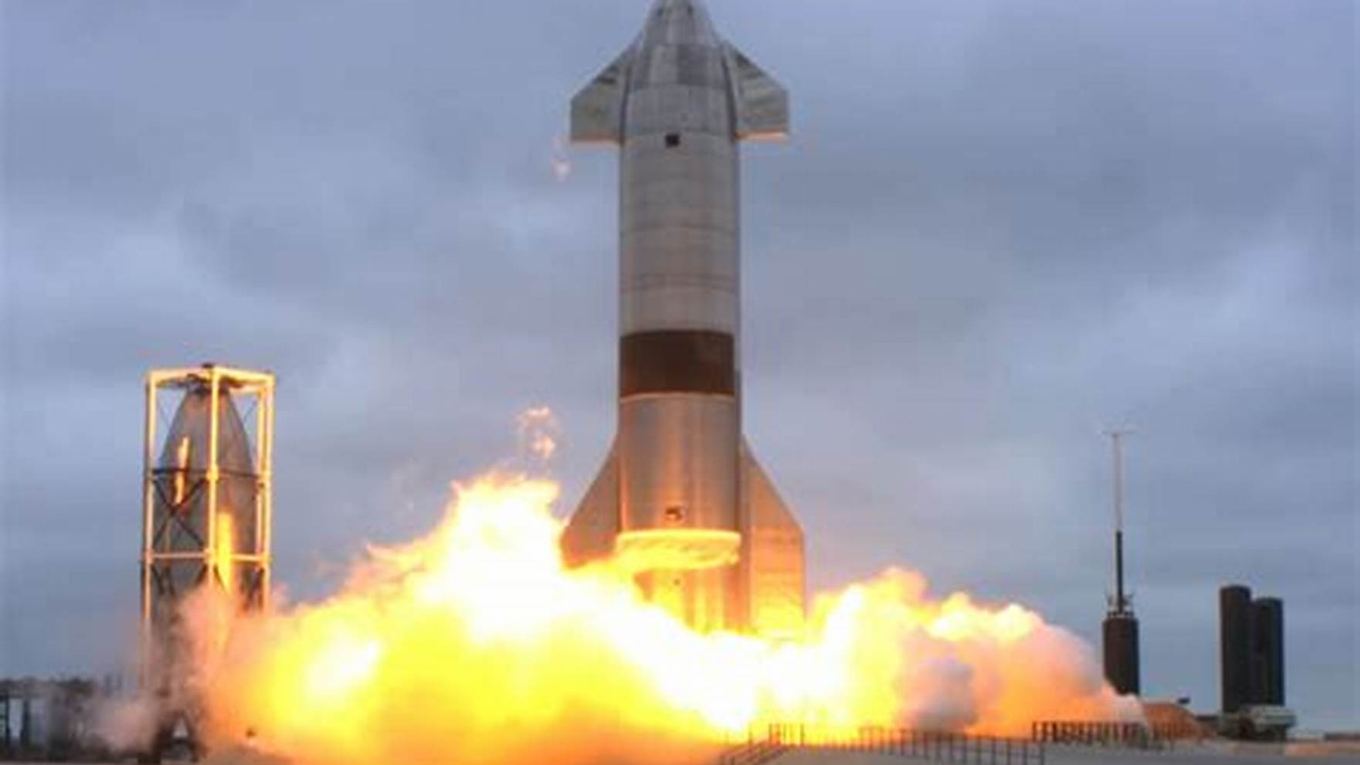
The other half of the plan failed. Flight 15 was SpaceX's first attempt to catch both stages, and on Friday 13 November the Super Heavy booster called off its own return. Dan Huot, a SpaceX spokesman, said the guidance system "detected that the booster was not in the place it was supposed to be to proceed with a catch". Kate Tice of SpaceX said its engines stopped firing too soon on the way down. It was diverted to the Gulf of Mexico and exploded before reaching the water; engineers are investigating.
The harder catch worked first
The ship was always the riskier recovery: it has to survive re-entry from orbit and then meet a tower precisely. Doing that at the first attempt, on only the second Starship flight to reach orbit, removes the largest technical doubt over the system.
Prediction markets moved hard. As of 15 November, traders put the chance that SpaceX or Musk declares the ship fully reusable before 2027 at 34%, up 11.5 points in a day. The question turns on an announcement, not a second flight, and covers the ship alone. SpaceX officials said on Saturday that the catch demonstrated Starship's full reusability; traders are treating that as a direction of travel, not the formal declaration they are waiting for.
Engineering has run ahead of the calendar
What holds the odds down is time. Starship has flown four times in 2026: on 22 May, 24 July, 28 September and 13 November. After the May flight, when the booster's engines also failed on the way back, the FAA declared a mishap and put launches on hold pending SpaceX's investigation. Booster engines have now misbehaved on the return on three of the year's four flights.
Traders give 70% to fewer than five Starship launches reaching space this year, down 13.5 points in a day. In plain terms, most still expect no fifth flight before 31 December, but the catch has made a December launch look far more plausible than it did on Friday. Musk wants Starship flying weekly, and SpaceX expects to launch from Florida within months, but no date for Flight 16 has been announced.
The longer view has shifted more. Traders now give 76% to two Starships docking in orbit by the end of 2027, up 14 points in a day, against 3.9% for this year. Docking is the step towards refuelling one ship from another, which NASA needs before Starship can land astronauts on the Moon as soon as 2028.
The money is in the Tesla talks
For investors, the catch lands in the middle of a negotiation. Bloomberg reported on 12 November that SpaceX and Tesla had moved on to haggling over price and control, with a deal possible as soon as December or early 2027, and that ring-fencing Tesla's China business is a sticking point. Musk said on SpaceX's 20 October earnings call: "Do I think it would be a good idea? Yes."
Traders give 28% to an official merger announcement by 31 December, 45% by the end of January, 59% by the end of February and 89% by the end of 2027. The end-2027 figure rose 4.5 points in the past day while this year's slipped 3. The central expectation is an announcement in February, not December.
The share price sets the terms. SpaceX's stock closed at $139.11 on Friday, before the catch, 3% above its $135 listing price and 31% below its June high. At Thursday's prices, buying Tesla without a premium would take roughly 11bn new SpaceX shares, leaving existing SpaceX holders with about 55% of the combined company. Every dollar SpaceX gains against Tesla before terms are fixed means fewer shares go to Tesla holders. Adam Jonas of Morgan Stanley, who has a $300 target on the stock, had called a ship catch "one of the most significant potential catalysts in SpaceX's nearly 25-year history".
Why the sceptics may still be right
One catch is not reuse. Nobody yet knows what re-entry did to the ship's engines and heat shield, or how long a reflight will take. A failed booster return is exactly what grounded Starship for months earlier this year. The merger carries political risk too: Nathan Johnson, Texas's attorney-general-elect, told Bloomberg that "any merger of companies of that consequence warrants tremendous scrutiny".
What it means for markets, business and politics
Stocks SpaceX shares reopen on Monday with the catalyst Morgan Stanley singled out now delivered. Any rally strengthens SpaceX's hand in setting a Tesla exchange ratio, and makes a generous premium for Tesla holders harder to win.
SPCXTSLABusiness A ship that can be caught and reflown quickly would cut the cost of every Starlink launch, the business that makes SpaceX its profits.
Policy NASA's 2028 Moon plan depends on orbital refuelling. Traders' confidence in docking by 2027 supports that timetable, but every booster loss runs through the FAA's review process first.
Deals The calendar for a merger announcement points to the first quarter of 2027, not December, so a year-end deal would come as a surprise.
What to watch
SpaceX's account of the booster failure, and whether the FAA treats it as a mishap, will set the pace for Flight 16. A reflight date for the caught ship, or a reusability claim from Musk, would move the odds quickly. On Monday, SpaceX's opening price will show how much of the catch investors had already priced in.
SpaceX has shown it can bring a Starship home. Before the year is out, it has to show it can fly one twice.