SpaceX lost its booster in the Gulf and the double catch with it. The riskier ship catch is still on
Future Times5 min read
In 30 seconds
Starship reached orbit on its 15th flight, but the upgraded Super Heavy aborted its tower landing and exploded off Texas. Traders now doubt a fifth Starship launch this year, yet their bets on a Tesla merger have barely moved.
- The ship catch, due at about 21:20 GMT on Saturday, is the test that counts for full reusability this year
- The new booster has still not completed a single return, so its first catch slips to a later flight
- Starship's setback has not shaken expectations that a Tesla-SpaceX deal is announced by the end of 2027
What it means
- StocksSaturday's catch is a near-term test for SpaceX shares, which trade barely above their offer price; a lost ship would…
- BusinessWithout a recoverable booster yet, each V3 flight still costs SpaceX a Super Heavy, which caps how quickly Starship can…
- PolicyNASA's lander choice will turn on orbital docking and refuelling, not tower catches, so a successful ship recovery and…
- DealsMerger expectations rest on governance, regulators and Tesla's China business, not launch results, so Starship setbacks…
What to watch
- 3 DecCome SpaceX's account of the booster's guidance fault, any FAA move on a mishap investigation, a…
The odds
Polymarket · live, 07:44 GMTStarship declared fully reusable in 2026
up 3 points over 7dfrom 31% a week ago22% when this was published
What would move these odds
- A clean catch of Ship 42 at Starbase on Saturday, followed by a SpaceX claim of full reuse, would push it up
- A diversion to the Pacific or loss of the ship would push it down
- A firm date for Flight 16 before Christmas would ease doubts on the cadence
Now · 34%
Think the market's wrong? Add your forecast and see who's closer.
- How many SpaceX Starship launches reach space in 2026: <570%down 3 points
- How many SpaceX Starship launches reach space in 2026: 5-618%down 4 points
- Tesla and SpaceX merger officially announced by December 31, 202628%up 19 points
Six and a half minutes after lifting off from Starbase on Friday evening, Booster 22 was meant to fly back into the arms of the launch tower. Instead it aborted itself, swung out over the Gulf of Mexico and exploded before it reached the water, leaving leftover propellant burning on the surface. "Well, that certainly isn't the news that we had hoped to hear for today," said Kate Tice, a SpaceX launch commentator.
The rest of Starship's 15th test flight went to plan. Ship 42 reached orbit, released 26 of SpaceX's third-generation Starlink satellites and settled into a coast of more than a dozen orbits. If it passes every system check, SpaceX will try to catch it with the tower's mechanical arms at about 3:20pm local time on Saturday (21:20 GMT), the first attempt to recover a spacecraft returning from orbit that way.
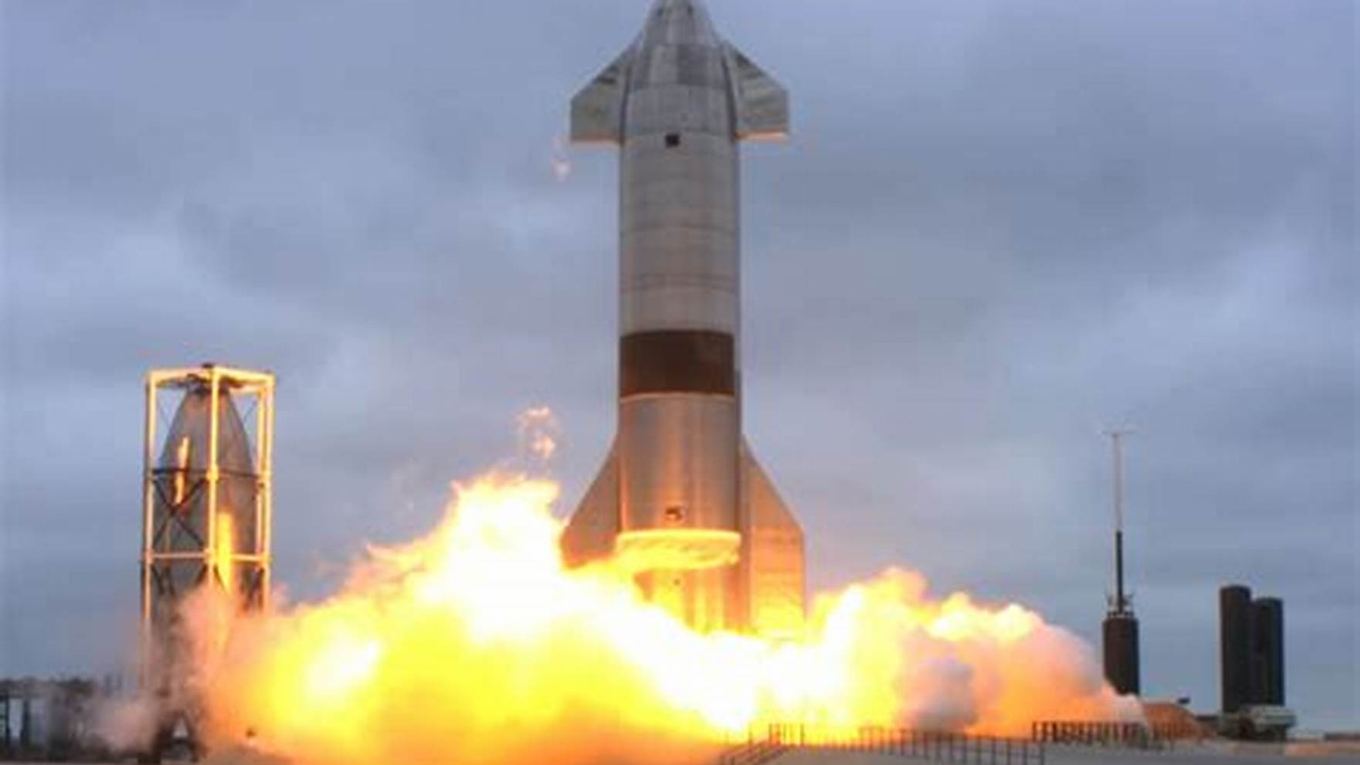
That catch is now the test that matters. Traders have marked down the odds that SpaceX declares Starship fully reusable this year, and now think a fifth Starship launch reaching space before 31 December is unlikely. The booster's loss has dented the timetable, not the corporate story: expectations of a Tesla-SpaceX merger are close to where they were before the launch.
A booster that has yet to come home
Friday's flight was the most ambitious in Starship's history: the first attempt to catch both stages on one mission. SpaceX had caught three earlier boosters at Starbase, but the upgraded Version 3 Super Heavy, which debuted in May, has still not completed a successful return.
"We were initially go for a catch but in the later stages of the coast the booster aborted itself for a GNC issue," Dan Huot, a SpaceX spokesman, said during the broadcast, referring to its guidance, navigation and control system. SpaceX gave no further explanation on Friday. About seven hours into the mission it said the ship and its heat shield were healthy. If the ship fails any decision gate, SpaceX can bring it down early in the Pacific.
The Federal Aviation Administration authorised the launch on Friday, and an FAA spokesperson said a nationwide air traffic ground stop hours later did not affect SpaceX's licence.
The ship catch is the test for this year's reusability goal
Traders put the chance that SpaceX or Elon Musk announces Starship is fully reusable before the end of 2026 at 22% (as of 14 November), down 6 points in a day and 11 in a week, on only $125,000 of trading. The question turns on the ship alone, so the booster's fate does not count. The drop suggests traders read Friday's fault as a sign of how much still has to go right, and how little time is left.
A clean catch on Saturday would be the strongest evidence yet for reuse of the upper stage: all 14 previous ships ended up in the ocean, some by design and some by accident. Even a perfect recovery would leave about seven weeks for SpaceX to fly the ship again, or to declare the job done, before the deadline.
The launch count tells the same story. Friday's flight was Starship's fourth of 2026, after flights in May, July and September. Traders give 89% to fewer than five launches reaching space this year, up 11 points in a day, and only 12.5% to five or six. SpaceX says Starbase is able to build a ship every two weeks; traders do not expect the launch pad to keep up before January.
The Moon timetable runs through orbit, not the tower
NASA is paying SpaceX billions to land Artemis astronauts on the Moon with a version of Starship, in competition with Blue Origin's Blue Moon. On Artemis III, due next summer, astronauts will practise docking with both landers in Earth orbit. The agency expects to choose between them a year before the Artemis IV landing, and a crewed touchdown could come as early as 2028. Refuelling Starship in orbit, which any Moon mission requires, has not yet been done.
Jared Isaacman, NASA's administrator, congratulated SpaceX on "another spectacular launch" without mentioning the booster. Traders give 62% to two Starships docking with each other by the end of 2027, the kind of operation a refuelling flight would involve, and 3.7% this year. A booster that cannot yet be caught raises costs, but it does not stop ships reaching orbit, which the lunar programme needs first.
Shareholders hold their nerve
SpaceX shares, listed on Nasdaq since a June debut that raised about $85.7bn, closed at $139.11 on Friday, 3% above the $135 offer price and about 31% below their June peak. They slipped about 2% after hours as the booster went down. Morgan Stanley's Adam Jonas, who kept a $300 price target, called a successful ship catch "one of the most significant potential catalysts in SpaceX's nearly 25-year history".
The launch has not shaken the merger story. Bloomberg reported on 12 November that SpaceX and Tesla were making progress in talks that could produce an announcement as soon as December, or slip into early 2027, with separating Tesla's China business among the main obstacles. Traders put the chance of an official announcement by 31 December at 28.5%, down 1.5 points in a day but up 19 in a week. By the end of 2027 they give 84%.
What it means for markets, business and the space race
Stocks Saturday's catch is a near-term test for SpaceX shares, which trade barely above their offer price; a lost ship would add a hardware setback to a stock already down about a third from its peak, and SpaceX shares are the currency Tesla holders would receive if the deal takes the shape now under discussion.
SPCXTSLABusiness Without a recoverable booster yet, each V3 flight still costs SpaceX a Super Heavy, which caps how quickly Starship can take over Starlink deployment from Falcon 9 and how soon its promised cost savings appear.
Policy NASA's lander choice will turn on orbital docking and refuelling, not tower catches, so a successful ship recovery and a quick Flight 16 matter more to Starship's Artemis case than Friday's booster loss.
Deals Merger expectations rest on governance, regulators and Tesla's China business, not launch results, so Starship setbacks are unlikely to move the timing of any announcement.
What to watch
The ship's return at about 21:20 GMT on Saturday comes first. After that come SpaceX's account of the booster's guidance fault, any FAA move on a mishap investigation, a date for Flight 16, and Tesla's annual meeting on 3 December, where the directors who would approve any deal are up for re-election.
SpaceX has already lost half of its double catch. Saturday's half is the one this year's reusability goal depends on.