Waller puts a half-point Fed hike on the table, and today's inflation report could decide it
A Fed governor has tied a bigger December rate rise to one number in this afternoon's CPI. Traders have barely priced it, though one threshold sits uncomfortably close to what core inflation has already been doing.
Future Times4 min read
The odds
Polymarket · live, 02:01 GMTFed raises rates by 50bp or more in December
up 10 points over 7d4% when this was published
Now · 11%
Think the market's wrong? Add your forecast and see who's closer.
- Fed Decision in December: 25 bps increase86%up 10 points
- Fed Decision in December: No change4%down 20 points
- Fed Decision in December: 25 bps decrease0%unchanged
Key points
- Waller backs a quarter-point rise in December and says a half-point should be considered if October core CPI is around 0.3% or higher
- September's core CPI rose 0.3%, so the trigger is the recent run rate
- Traders price a half-point or larger December rise at under 5%
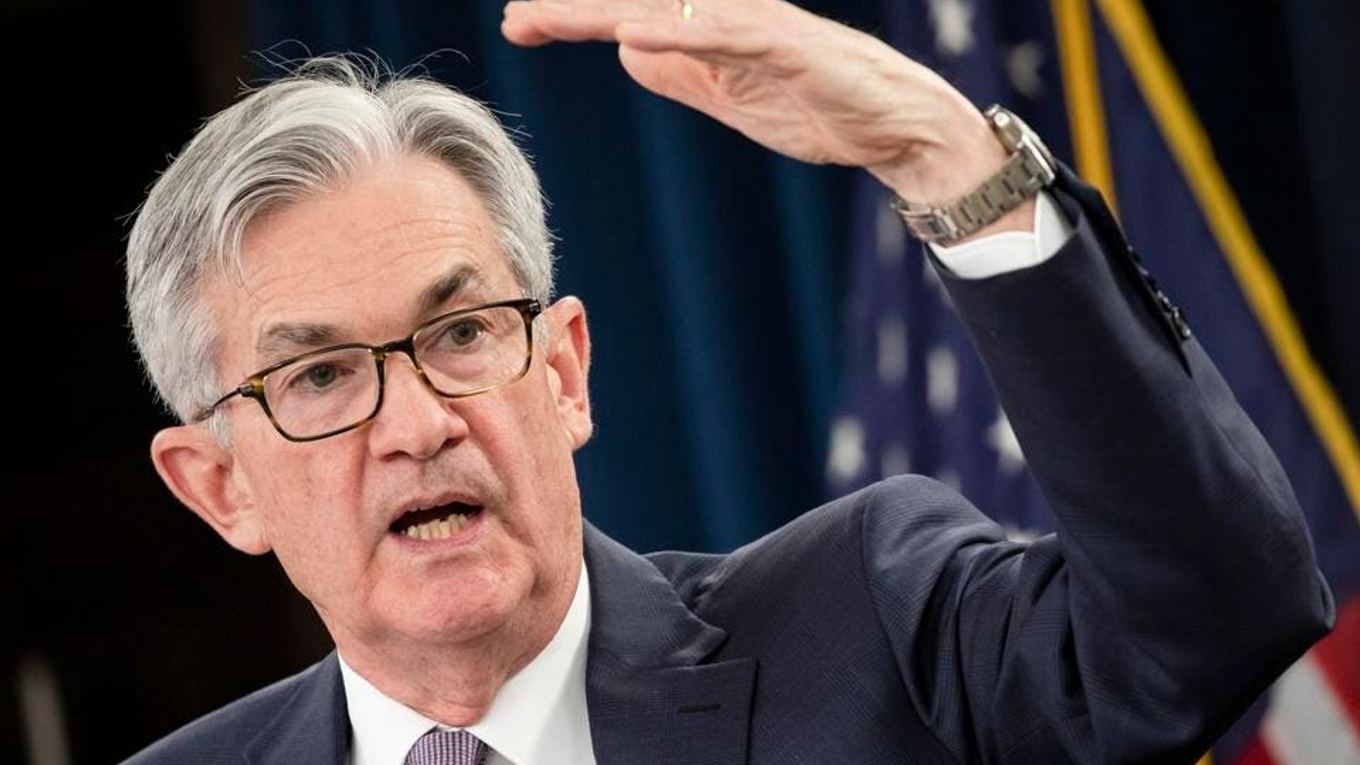
"Let's just say it. September's inflation data were bad." Christopher Waller, a Federal Reserve governor, said so in London on Tuesday morning, a few hours before the October consumer price report. Then he named a number. If core CPI comes in "around 0.3 percent or even higher", he said, "a 50 basis point hike in the policy rate should be considered at the December meeting."
The threshold matters more than the adjective. The Bureau of Labor Statistics reported that core prices, which exclude food and energy, rose 0.3% in September. Waller is not asking for a new surge in inflation. He is asking whether the recent pace continues.
A base case that is already hawkish
Waller's starting point is a hike either way. "I would still support a 25 basis point increase in the FOMC's policy rate at our December meeting," he said, even if October's data improve on September's. The Fed held its target range at 3.75% to 4% on 28 October, in a 10-2 vote. The two dissenters, Lisa Cook and Beth Hammack, wanted a quarter-point rise then.
That makes Waller's message one of escalation, not conversion. He backed holding in October, and now argues that only a half-point would protect the Fed's standing if inflation stays hot. "Hiking only 25 basis points would put our credibility at risk," he said, "a risk I am not eager to take." He also warned that "energy price pressures may pass through to goods and services in a more sustained way than in the past".
His own numbers show why. Headline PCE inflation, the Fed's preferred gauge, rose 0.5% in September and 3.7% over the year, he said, and core PCE was up 3.1%. More than 70% of core PCE services components were rising faster than 3% a year.
What traders are pricing
Polymarket traders put the chance of a quarter-point rise at the December meeting, which ends on 9 December, at 86.5% (as of 10 November), up 14 points in a week. They give 7.5% to no change, down 15 points in a day, and 0.5% to a cut. A rise of half a point or more stood at 4.5%, up almost 3 points in a week.
A separate market on whether the Fed raises rates again at any point in 2026 reads 91%, up 18.5 points in a week. Add the December quarter-point and half-point outcomes together and you get 91%, so almost all of the expected tightening is concentrated in one meeting rather than spread across the winter.
The gap in the data is the half-point. Waller has told markets which print would justify it, and that print is the same as the last one. Yet traders give it about a one-in-twenty chance at most. Either they expect core inflation to ease below 0.3%, or they doubt the committee would follow one governor's lead.
The inflation market tells a similar story. Traders put 94% on October's annual rate matching September's 3.7%, although that market is small, with only about $39,000 traded. The annual rate would then stay flat, even as the monthly core figure decides the argument.
The case for stopping at a quarter-point
There are good reasons the market may be right. Waller is one of 12 voters, and the committee's October statement said only that it would "gather more information" on the right stance. Core CPI rounds, and a reading of 0.28% and one of 0.34% are both "around 0.3". The word he used was "considered", not "will".
Energy is the other uncertainty. Waller's concern is that the oil shock will spread to wider prices, but a softer headline figure from cheaper fuel would say little about services inflation. A cooler core number would let him argue the pass-through is slower than he feared.
The risk in the other direction is that a hot core reading arrives after Waller has publicly set the bar. A reading of 0.4% or more would make a half-point hard to dismiss, and the 4.5% price would have to move a long way.
What it means for markets, business and policy
Rates The market has priced a December hike nearly in full, so the quarter-point itself will move little. The risk is in the size and the signal about next year. A half-point would suggest the Fed sees itself behind the curve, and would push up short-dated yields first.
Stocks and sectors A bigger hike would hit the most rate-sensitive areas hardest: housebuilders, commercial property and unprofitable growth stocks. Banks with large deposit bases can benefit from higher short rates, but not if tightening slows lending.
Business Firms planning to borrow before year end face a higher cost of money than they assumed in the summer. Waller's talk of energy pass-through into goods and services also points to continuing pressure on input costs.
Policy Waller's speech shows how the Fed is thinking about credibility. A committee that has already had two dissents for a hike has less room to stand still, and the threshold he set gives the data an unusually direct role in the December decision.
What to watch
The BLS publishes October CPI at 8:30am in New York, 1:30pm in London. The numbers to check are monthly core CPI against Waller's 0.3% line, and whether services excluding housing cool. The Fed's December decision is the next test. Until then, any fall in the probability of a quarter-point rise below 80% would suggest traders think the committee has lost its nerve.
Waller has made the data the decision. The print will tell us who was listening.