Trump says Iran talks are making progress. His blockade is now heading for Tehran's land borders and the Caspian.
Fresh strikes on Qeshm, a new task force and a $20mn bounty show Washington tightening the screw while Qatar pushes an inspections-for-Hormuz plan. Traders believe the squeeze: hopes of the blockade ending this month have collapsed.
Future Times4 min read
The odds
Polymarket · live, 03:50 GMTUS announces an end to the Iran blockade by 30 November
down 11 points over 7d19% when this was published
Now · 14%
Think the market's wrong? Add your forecast and see who's closer.
- IAEA visits Isfahan, Fordow, or Natanz nuclear site by December 3117%unchanged
- Israel x Iran ceasefire continues through: November 2291%up 32 points
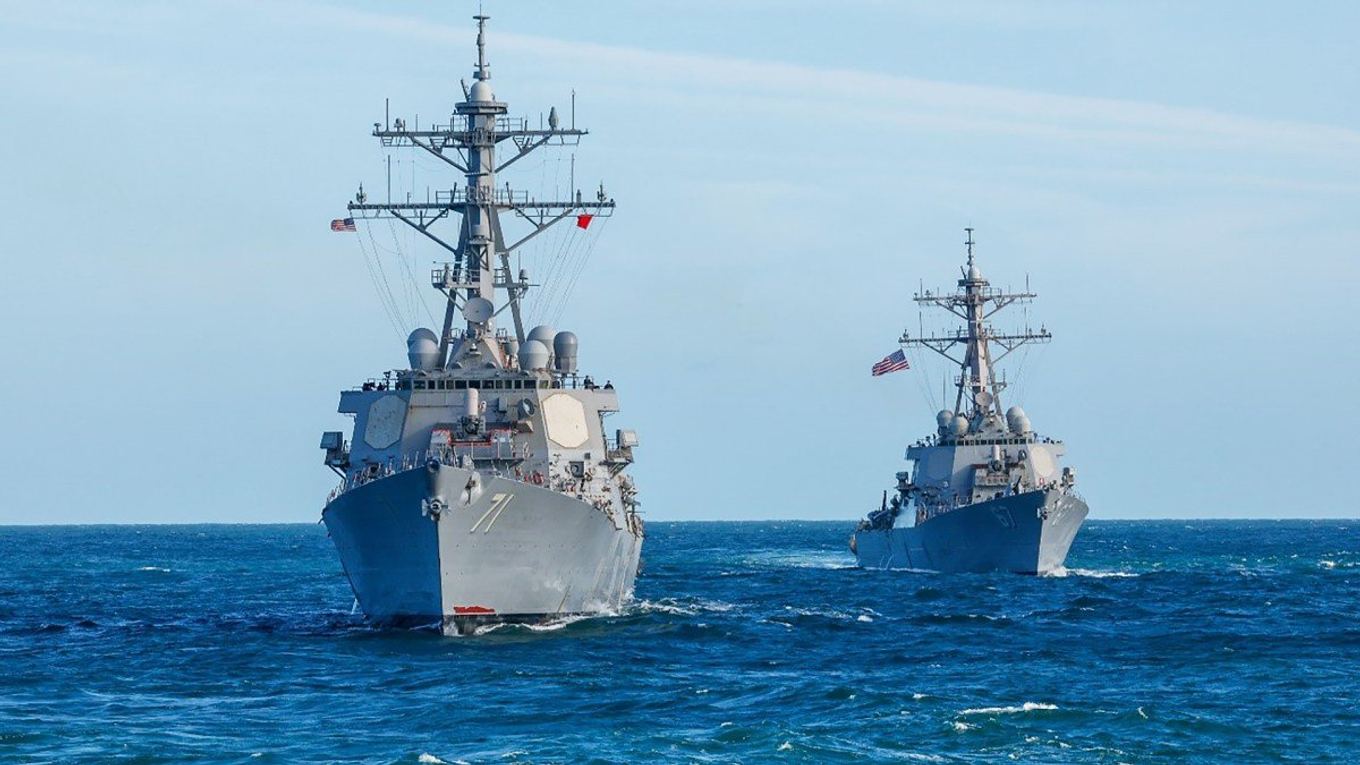
Donald Trump called it "minor". On Friday US forces struck Iranian air defences on Qeshm, an island in the Strait of Hormuz, and the president was dismissive: "They built a little bit of an anti-aircraft device and we knocked it out in about 15 minutes, maybe five." Iran said it shot down an American MQ-9 drone, which Washington has not confirmed.
They were the first US strikes since Tuesday's midterm elections, which delivered a major Democratic victory that Trump himself blamed on the war. The bigger move came on Saturday, when the US military said it was launching Task Force Iron Gate, a unit based in Tampa that will try to stop Iran moving weapons and sanctioned goods across its land borders and the Caspian Sea. Reuters first reported the plan. Late on Friday, Central Command had announced a State Department reward of up to $20mn, and possible relocation, for information about Iran's nuclear programme.
Washington is squeezing harder and talking at the same time, and traders believe the squeeze. Polymarket traders put the chance of the US announcing an end to its naval blockade by 30 November at 19% (as of 7 November), down from 31% a week earlier. A nuclear deal this year looks a long shot, and normal traffic through Hormuz further away still. The diplomatic track to watch is Qatar's.
A blockade that no longer stops at the shoreline
Iron Gate is an admission that the sea blockade leaks. Central Command says the naval cordon has kept more than $25bn of Iranian crude off the market, but Reuters has also reported that Iranian military agencies imported at least $2bn of hardware, explosives and heavy trucks since January 2025: across the Caspian from Russia, by lorry from Central Asia and by air from China. Iron Gate targets those routes. Admiral Brad Cooper, Central Command's commander, said it "will further constrain Iran's ability to finance terrorism, rebuild weapons factories, and replenish their military."
The bounty, for information on Iran's nuclear "facilities, equipment, and associated personnel", points the same way. The Rewards for Justice offer says the International Atomic Energy Agency has lost "continuity of knowledge" over Iran's centrifuges.
Doha's offer: inspectors first, ships second
"We're dealing with them now. They want to make a deal," Trump said on Friday, claiming "a lot of progress with Iran". Majed al-Ansari, Qatar's foreign ministry spokesman, rejected reports that talks had collapsed, saying such claims serve "only those seeking to prolong the war".
The Guardian has reported the shape of Doha's latest proposal. The US would lift its naval blockade at once and release part of about $8bn of frozen Iranian assets. Iran would let IAEA inspectors into its bombed nuclear sites, including those housing its stockpile of highly enriched uranium, without having to ship the stockpile abroad; down-blending stays on the table. On the second day Iran would reopen the strait along a route negotiated with Oman.
The obstacles are plain. Tehran says it has lost faith in the IAEA's chief, Rafael Grossi, and fears inspection data would become US and Israeli targeting data. Its army says the strait stays shut until Washington meets Iran's demands, which include an end to the blockade, sanctions relief, the release of frozen assets, war compensation and an end to Israeli operations in Lebanon.
Traders are pricing the stick, not the carrot
The timeline has slipped rather than collapsed. Traders give 37% to an announced end to the blockade by 31 December and 66% by 31 March. That puts the most likely end in the first quarter of 2027.
The diplomatic milestones look harder still. Traders give only 16% to IAEA officials setting foot in Isfahan, Fordow or Natanz by year-end, 11% to a final nuclear deal and 9.5% to Hormuz traffic returning to normal. Under Doha's sequence, inspections and an end to the blockade travel together. That traders rate the blockade's end more than twice as likely as inspectors on site suggests they expect any early relief to come from a looser political bargain, not the full Qatari package.
Nor is the squeeze read as a prelude to all-out war. Traders give 80% to Israel and Iran refraining from strikes on each other through 22 November, up more than 20 points in a week, and the chance of a US invasion before 2027 has fallen 7 points to 11%, on more than $78mn of trading.
Why the squeeze could still break quickly
Doha's plan front-loads the blockade: it would be lifted on day one. If Tehran accepted inspections, relief could come abruptly. The midterms cut both ways: Vice-President JD Vance has linked the war to Republican losses, which blunts Trump's threats in Tehran but raises the political value of a deal. Traders give 29% to a senior US-Iran meeting by 30 November and 45% by year-end.
What it means for markets, business and geopolitics
Markets Brent traded at $98.32 a barrel on 6 November, about 12.5% lower on the week, before the strikes and Iron Gate. With an end to the blockade this month rated at about one in five, the peace discount in crude looks ahead of the evidence, and Monday's open is the first test.
Shipping and insurance A blockade that runs into 2027 keeps war-risk premiums and Gulf freight rates high, with Asian refiners most exposed: China took about 42% of the Gulf crude that crossed the strait in October, according to Kpler data.
Defence Policing land borders and the Caspian is surveillance-heavy work, supporting demand for US drones and intelligence services well beyond any truce.
Geopolitics Iron Gate brings US enforcement to Russia's Caspian trade, a new source of friction with Moscow, and makes Qatar and Oman indispensable.
What to watch
Tehran's formal answer to the Qatari proposals; any IAEA announcement on access to the bombed sites; the Israel-Iran truce through 22 November; and whether the chance of the blockade ending by 30 November climbs back above 30%.
Washington has made the stick bigger. Whether it buys a deal now depends on Doha getting inspectors through Iran's door before the blockade's next turn of the screw.